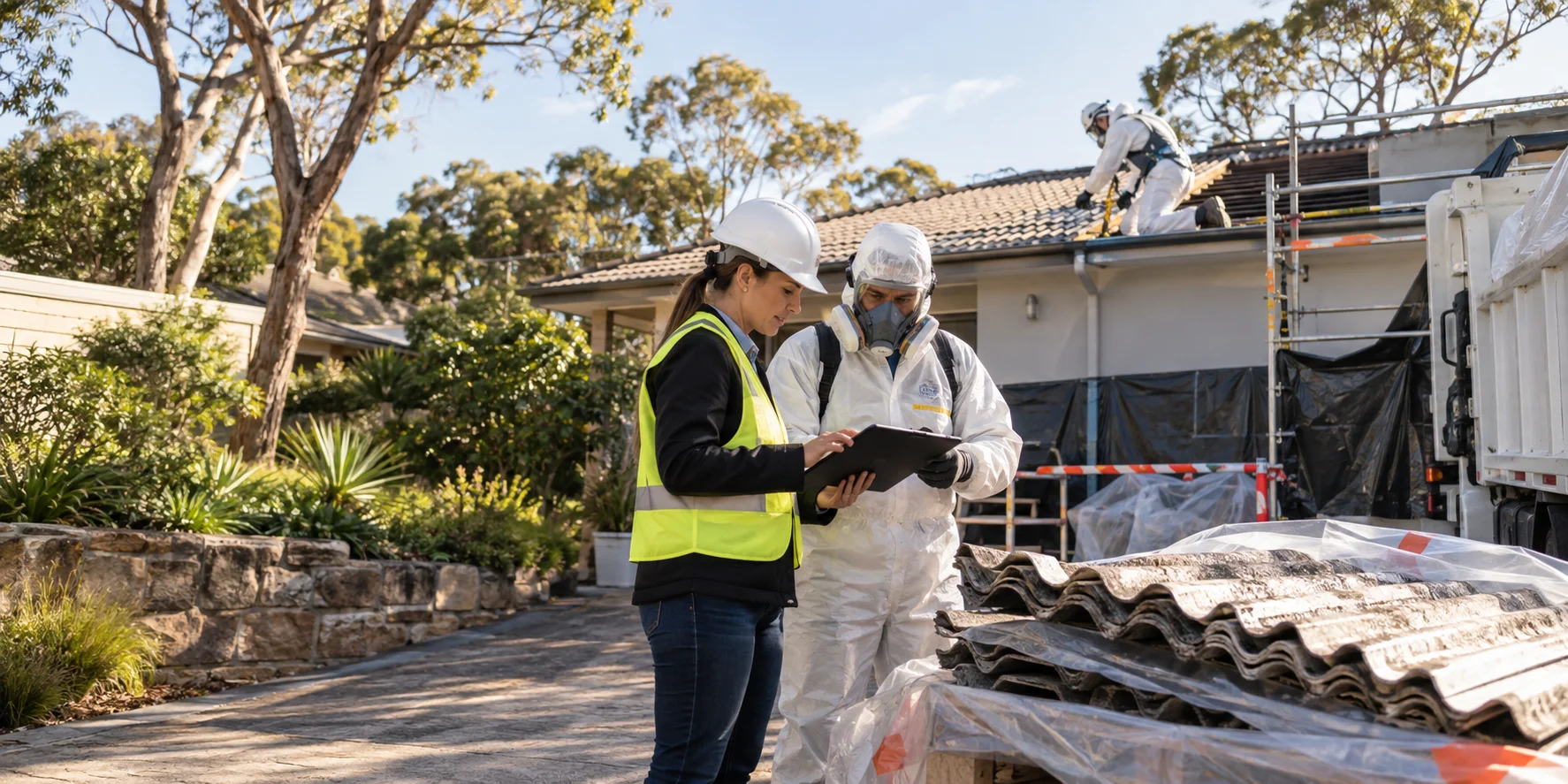
- Bonded (non-friable)
- Asbestos fibres locked in a cement or resin matrix, such as fibro sheet. It is lower risk while intact and undisturbed, but cutting, drilling, breaking or weathering releases fibres, and quantities over 10 m² need a licensed removalist in NSW.
- Friable
- Asbestos that can be crumbled by hand and releases fibres easily. Needs a Class A licence. Examples can include some pipe lagging, loose insulation and damaged backing on old vinyl flooring. Leave it completely undisturbed and seek licensed advice promptly.
- Class A / Class B
- The two licence classes for asbestos removal in NSW. A covers friable and bonded; B covers bonded. These licences are issued by SafeWork NSW, and you can ask the removalist for the licence number and class before accepting their quote.
- Clearance certificate
- Document from an assessor confirming the area is safe after removal. It follows a visual inspection and sometimes air monitoring, and is needed before people reoccupy the space or demolition continues. Keep it with your property records and disposal paperwork.
- Control plan
- Written plan for how removal will be carried out safely. Prepared by the licensed removalist, it covers the asbestos identified, the removal method, controls, protective equipment, decontamination and waste disposal, and should be available to the client before work starts.
- Asbestos register
- A written record of identified or presumed asbestos in a workplace building, listing its location, type and condition. Workplaces built before 2004 are generally required to keep one, and it should be checked and updated before any refurbishment, strip-out or demolition begins.