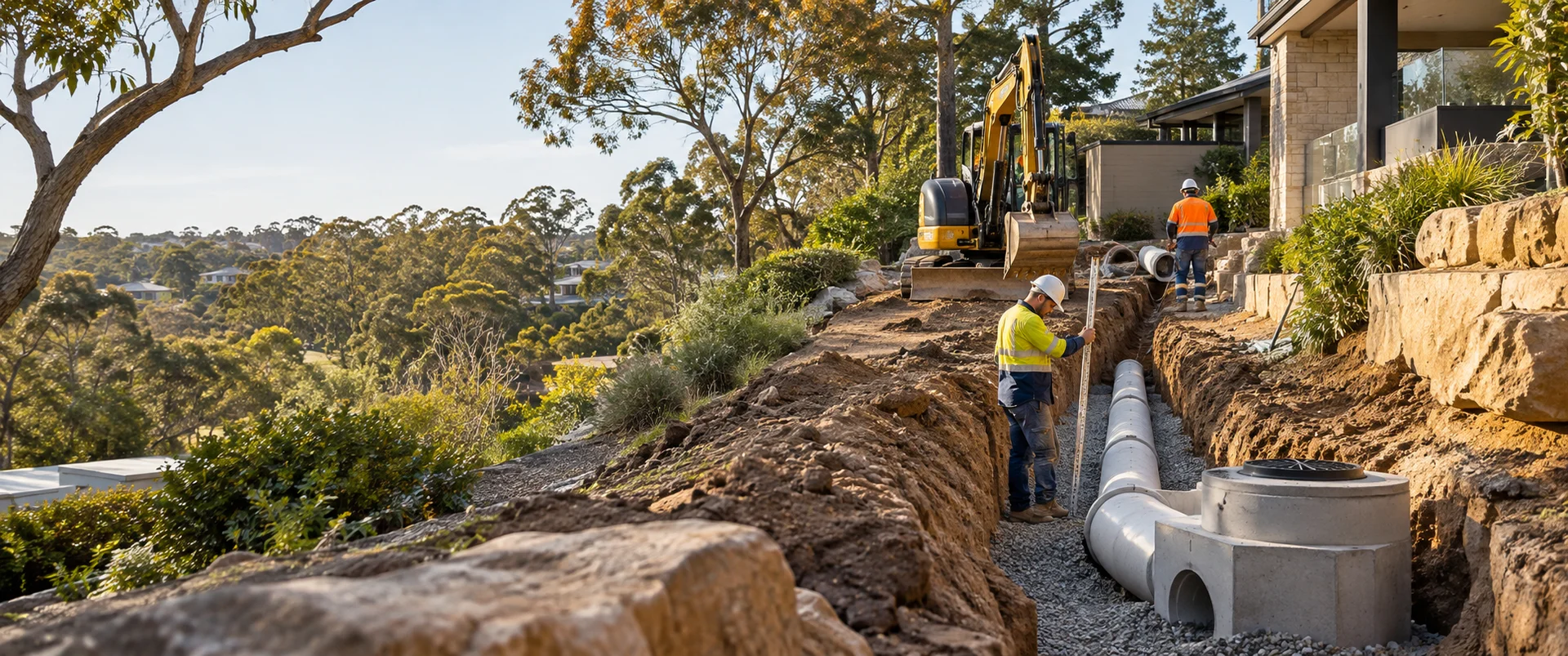
- Invert level
- The level of the inside bottom of a pipe or pit, used to set the fall. Drawings list inverts at each pit and outlet, and the difference between them sets the grade. Checking them before backfilling catches flat sections early.
- Kerb adaptor
- The fitting that lets a pipe discharge through the kerb to the street gutter. Council sets the type and size allowed, and the work may need separate approval. Its level limits how deep the pipe can sit at the boundary.
- OSD
- On-site detention, a tank or basin that slows the release of stormwater. It stores water from heavy rain and releases it through a small orifice. Council decides whether one is needed, and a hydraulic engineer designs its volume and outlet.
- Grated pit
- A pit with a grate that collects surface runoff and joins pipes underground. Grates are load rated, so a driveway pit needs a heavier grate than a garden one. Leaves and silt collecting in the base should be cleared regularly.
- Easement
- A legal right for drainage to cross a neighbouring lot, shown on the title. Blocks falling away from the street often need one. New easements need the neighbour's agreement and legal work, and building over the pipe is usually restricted.
- Charged line
- A sealed pipe that runs underground from downpipes and rises into a rainwater tank inlet. Water sits in the pipe between storms, so joints must not leak, and a drain valve at the low point lets the line be flushed of silt.