CONSIDERED DEMOLITION. EXCEPTIONAL POSSIBILITIES.LET’S TALK ABOUT YOUR SITE ↗ 00 0000 0000
Sutherland Shire Demolition
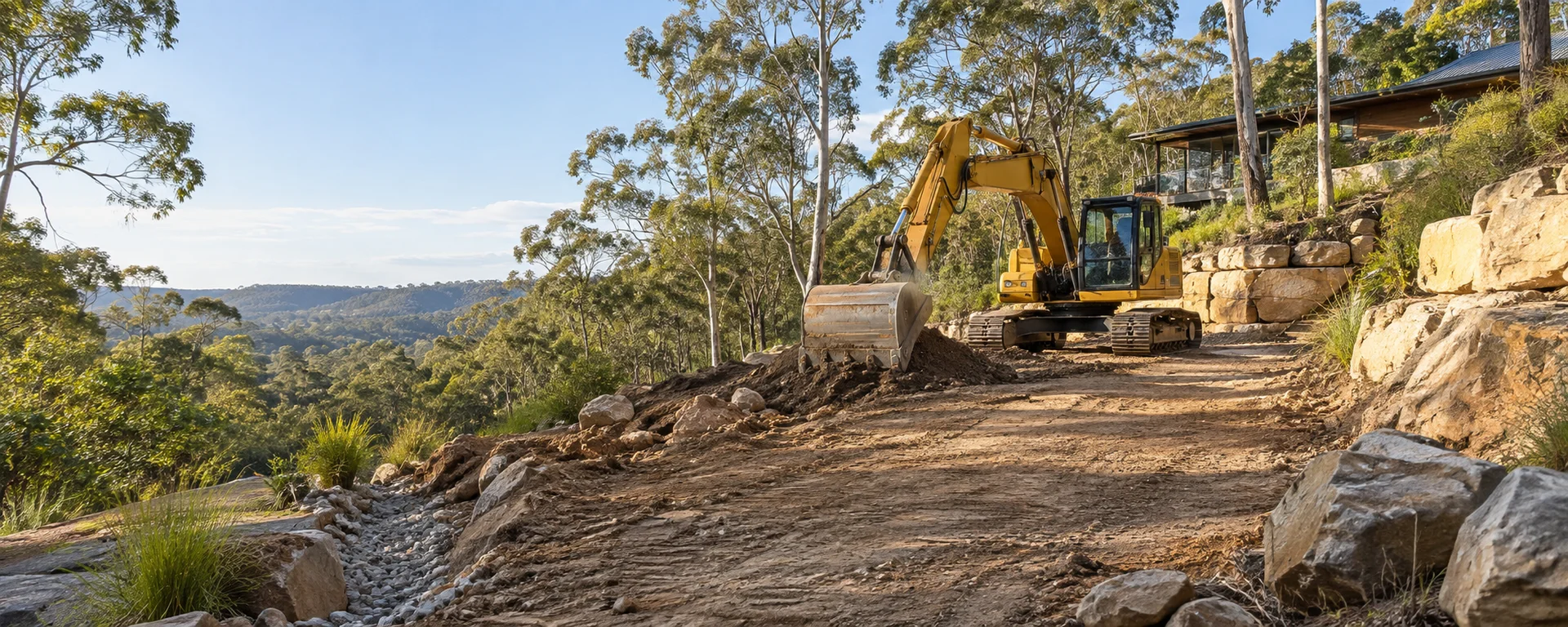
AI-generated illustration for Sutherland Shire Rural Excavation, inspired by Sutherland Shire, NSW
EXCAVATION

Sutherland Shire Rural Excavation

Discuss excavation on larger or fringe-area properties with travel, access and land conditions included in the scope.

SUTHERLAND SHIRE, NSWRESIDENTIAL   /   COMMERCIALAI-generated site illustration
YOUR SITE. THE RIGHT APPROACH.

Rural Excavation in Sutherland Shire

Larger blocks bring their own challenges, and Sutherland Shire Rural Excavation handles open land, long access tracks and varied terrain with the right machinery. We dig for sheds, house pads, drains, dams and driveways.

Tell us about your property, access and what you want built or improved. Clear planning around soil type, drainage and distances ensures the work is efficient and the finished ground suits your intended use.

From Heathcote, Engadine and Waterfall to Bundeena and Royal National Park borders, semi-rural properties need practical solutions. We bring suitable equipment, manage runoff and leave a stable, usable result.

Explore the scope ↓
01 Site review
and access
02 Clear written
scope
03 Defined site
handover
LET'S TALK ABOUT YOUR SITE

Get A Free Estimate

Tell us about the job. Save your project details, then call us to discuss a quote.

Your brief downloads to your device. No enquiry is sent. Call 00 0000 0000 to discuss your project. Privacy information.

Rural Excavation Services in Sutherland

01

Sheds, Pads and Driveways

We excavate house pads, shed sites and access tracks on larger properties, using machinery suited to open land, longer distances and varied terrain, from small rural blocks to larger acreage. These building pads are compacted and shaped to shed water.

02

Drains, Dams and Earthworks

Rural blocks often need drainage and water storage, so we dig drains, dams and contour banks, shaping the land to suit your intended use and stormwater flow, while keeping costs well controlled. Overflow paths are planned to protect downstream land.

03

Practical Site Solutions

We plan around soil type, runoff and access, including wet ground, low creek flats and steep, rocky sections, delivering stable, usable results that suit your property, your budget and the way you actually use your land, regardless of the season.

BIG BLOCK, DIFFERENT RULES

Suburban dig versus acreage dig

Suburban block

  • Tight access, neighbours close by, restricted hours
  • Sediment control and noise are major concerns
  • Spoil usually has to be carted off
  • Services are mapped through the street

Rural or fringe property

  • More room, longer haul or float distances to the site
  • Private tracks, gates and creek crossings set the limits
  • Spoil can often be spread or shaped on site
  • Private bores, tanks, septic and power lines are not on public plans

More space does not always mean an easier job. Access and unknown private services usually matter more.

LAND CONDITIONS

What to check on a larger block

Access tracks

Check gate widths, track grades, creek crossings and low branches. A float carrying an excavator needs a safe place to unload. Old bridges and pipe crossings may not carry the weight, so confirm their condition before a loaded truck crosses.

Drainage paths

Watch where water flows after rain. New cuts or fills change runoff and can erode paddocks or flood neighbours. Mark gullies and existing drains before work starts, and plan where diverted water will go without concentrating it in one spot.

Overhead power

Power lines have mandatory exclusion zones. Plan machine reach and tipper trucks with the lines in mind. Raised tipper bodies and excavator booms are common contact points, so use a spotter and contact the network operator if work is close.

Vegetation

Clearing may need approval, and bushland edges can carry habitat and bushfire rules. Check before earthworks. Removing trees or native vegetation without consent can lead to penalties, so confirm with Council what can be cleared and what must be protected.

Bushfire prone land

Parts of the Shire fringes are mapped bushfire prone. Site works around a new building may be influenced by its BAL under AS 3959. Asset protection zones, access and water supply may be set by approval conditions, so check early.

ON-SITE WORKFLOW

Rural Excavation Experts in Sutherland Shire: How We Do The Job

  1. Walk the property

    Look at access, existing earthworks, drainage lines and any signs of old fill or buried services with the owner. Long-term owners often know where old pipes, tanks or septic trenches run, which saves guessing and reduces the risk of damage.

  2. Confirm what is needed

    Check whether planning approvals, water rules or Council consent apply to the work, as these vary by property. Zoning, nearby waterways and vegetation all play a part, so ask Council early rather than finding out once machines are on site.

  3. Peg out the work

    Pads, tracks, cuts and spoil areas are pegged or painted, with a temporary benchmark set where no fixed level exists nearby. On open ground it is easy for a job to drift, so clear marks keep the operator and owner in agreement.

  4. Plan machine delivery

    Transport of the excavator and any trucks depends on gate size, ground strength and turning room. Pick a suitable unloading spot on firm, level ground, and check whether recent wet weather would make the track unsafe for a loaded float.

  5. Strip and save topsoil

    Topsoil is pushed off the work area and stockpiled separately, so it can be spread back over batters and disturbed paddock later. Keep the piles low and out of drainage lines, and avoid stripping more ground than will be worked soon.

  6. Excavate and shape

    Work proceeds to the nominated levels, with spoil placed where agreed and sediment controls near watercourses. Spoil should not be dumped in drainage lines or against trees, and any fill used for tracks or pads needs proper compaction in layers.

  7. Stabilise the ground

    Bare areas are seeded, mulched or otherwise covered to resist erosion before heavy rain. Steep batters may need matting or rock, and new drains should be checked after the first heavy storm to see that water is going where intended.

  8. Record and hand over

    Walk the finished work with the owner and note where new pipes, culverts, fill and drains have gone, ideally on a sketch or marked aerial photo. Those records help the next contractor avoid damage, and are useful when the property is sold.

RURAL JOB PREP

Get a rural dig started

  • Clear access path for the machine and trucks
  • Gate and bridge or crossing limits measured
  • Livestock moved away from the work area
  • Private services marked, including bores and septic
  • Spoil placement area agreed
  • Approvals checked with Council
  • Weather window considered for tracks and soft ground
  • Fences and gates to be reinstated noted
PROPERTY TERMS

Rural Excavation Terms That You Need To Know

Float
The low-loader truck that carries an excavator or other tracked machine to site. It needs a firm, level unloading area and enough turning room nearby, which on rural properties is often the first thing to check before booking a job.
Batter
The sloped face of a cut or fill. How steep it can be depends on the soil, height and drainage. Batters that are too steep or left bare tend to slump or erode, so they are usually shaped and vegetated.
Catch drain
A shallow channel that diverts surface water away from a slope or work area. It needs a stable outlet so the redirected water does not simply cause erosion somewhere else, and should be checked and cleared after each heavy rain.
Turkey nest
A type of above-ground water storage with banks built on all sides. Because it has little natural catchment, it is usually filled by pumping from a bore, creek or another dam, and the banks need suitable clay and careful compaction.
WHY CHOOSE US FOR RURAL EXCAVATION

Why Choose Our Rural Excavation Experts

Larger blocks bring different challenges, and our rural excavation experts bring the right machinery and practical experience. We handle house pads, shed sites, access tracks, drains and dams, planning around soil type, runoff and the distances involved. Clear communication means you understand the plan, the timeframe and the likely costs before we start. We protect existing trees, fences and waterways wherever possible and leave the ground stable and usable. With local knowledge of semi-rural Sutherland Shire properties, from Engadine and Heathcote to Bundeena, we deliver durable results that suit the way you actually use your land and keep costs controlled.

Talk to our team ↗
AI-generated illustration of rural excavation works in Sutherland Shire
RURAL RISKS

Common Rural Excavation Mistakes in Sutherland Shire: How To Handle Them

01

Assuming no approvals are needed

Larger blocks still have vegetation, waterway and planning rules. Confirm with Council before starting. Work near creeks, clearing native vegetation and new farm dams are common triggers, and fixing unapproved earthworks afterwards usually costs far more than asking Council first.

02

Soft ground trapping machines

Wet paddocks and creek flats can bog heavy machines. Allow weather days and use ground protection where needed. Recovering a bogged excavator can damage the ground further, so wait for conditions to dry rather than pushing on through soft areas.

03

Hitting private services

Dial Before You Dig will not show private water lines, bores or septic systems. Ask the owner and check on site. Look for tank overflows, pump sheds, inspection openings and lush grass strips that mark buried pipes or absorption trenches.

04

Changed runoff

A new bank or cut can send water to a neighbour. Plan drains and outlets as part of the earthworks. Concentrated flow from a track or pad can scour paddocks, so spread it or direct it to a stable outlet.

ASKED ABOUT RURAL EXCAVATION

Frequently
Asked Questions

Property access, drainage paths and project location.

Ask us about your project ↗
01Do you work outside the Sutherland Shire?+

Availability and travel depend on the job and the schedule. Ask the contractor directly whether they can cover your location and what travel is involved.

02Can the excavated soil stay on my property?+

Often it can be spread or shaped, if it is suitable and does not change drainage in a harmful way. Approvals may apply, so check first.

03Is bushfire a concern for earthworks?+

If your land is bushfire prone, site works and clearing around the building may be shaped by the BAL requirements. Ask your certifier or designer.

04What if my access track is too narrow?+

Smaller machines can often get through narrow gates, though they work more slowly. Measure the narrowest point and tell your contractor.

EXCAVATION

Let’s start your rural excavation project.

Share the address, the access and the result you need.
Details first. Then a plan that suits the site.

Start a conversation ↗00 0000 0000