CONSIDERED DEMOLITION. EXCEPTIONAL POSSIBILITIES.LET’S TALK ABOUT YOUR SITE ↗ 00 0000 0000
Sutherland Shire Demolition
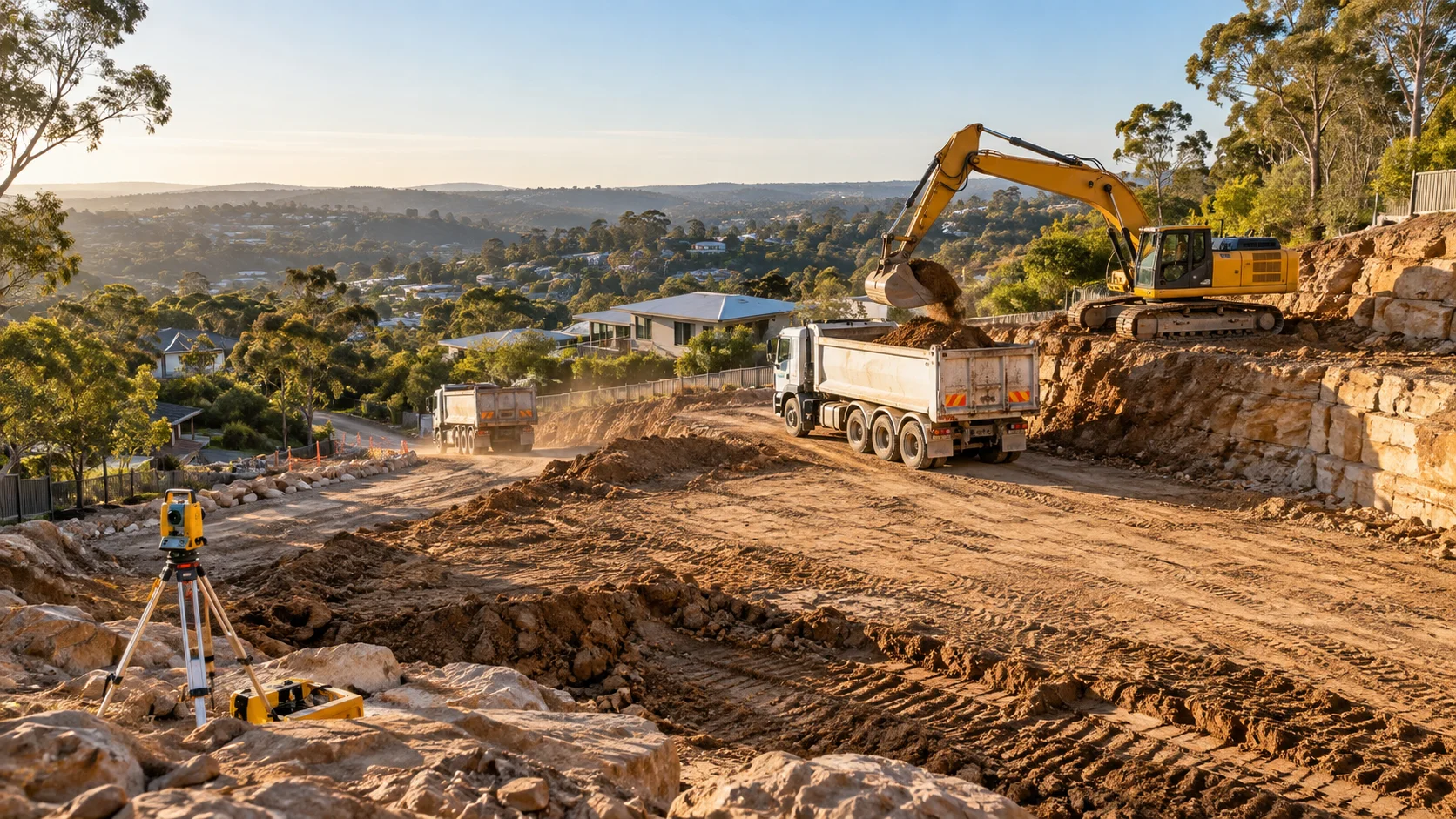
AI-generated illustration for Sutherland Shire Bulk Excavation, inspired by Sutherland Shire, NSW
EXCAVATION

Sutherland Shire Bulk Excavation

Shape larger sites with coordinated cut, fill and cartage for the main earthmoving stage.

SUTHERLAND SHIRE, NSWRESIDENTIAL   /   COMMERCIALAI-generated site illustration
YOUR SITE. THE RIGHT APPROACH.

Bulk Excavation in Sutherland Shire

Large digs need planning, capacity and control, and Sutherland Shire Bulk Excavation delivers all three. We move large volumes of soil and rock efficiently, with the machinery, trucks and traffic planning to keep the site flowing.

Tell us the site area, required depth and any levels or plans you hold. We coordinate spoil removal, access and staging with your builder, so the dig is completed on time and the ground is ready for the next step.

For projects around Taren Point, Kirrawee, Miranda, Caringbah and Cronulla, tight streets and neighbouring buildings need careful management. Experienced operators keep the excavation safe, accurate and compliant from start to finish.

Explore the scope ↓
01 Site review
and access
02 Clear written
scope
03 Defined site
handover
LET'S TALK ABOUT YOUR SITE

Get A Free Estimate

Tell us about the job. Save your project details, then call us to discuss a quote.

Your brief downloads to your device. No enquiry is sent. Call 00 0000 0000 to discuss your project. Privacy information.

Bulk Excavation Services in Sutherland

01

Large Volume Earthmoving

We move large quantities of soil and rock efficiently using suitable, well-maintained excavators and trucks, matched to the volume, ground and access of your site, keeping your entire project on schedule and your whole site flowing from start to finish.

02

Traffic and Access Planning

Truck routes, loading areas and street access are planned carefully, with spotters, signage and traffic controllers where they are needed, reducing disruption to neighbours and keeping your excavation safe, organised and compliant with council requirements, ensuring smooth deliveries and removals.

03

Safe Batters and Stable Edges

Excavation edges are shaped for stability, battered back or supported as the soil and rock require, protecting workers and neighbouring properties and ensuring the site remains safe until the next construction stage can proceed, giving workers and neighbours genuine confidence.

CUT AND FILL CHOICES

Cart it away or keep it on site

On a sloping block the cheapest soil is often the soil you never move off the property.

Export the spoil

  • Needed when the cut is bigger than any fill requirement
  • Cost builds with every truck load, tip fee and levy
  • Soil may need classification before a site will accept it
  • Street access and truck turnaround become the bottleneck

Balance cut and fill

  • Use the dug material to build up the low side of the platform
  • Fewer truck movements and lower tipping cost
  • Fill must be suitable and compacted in thin layers
  • Engineered fill under buildings may need tested compaction (AS 3798)

Ask for the earthworks to be set out as a cut and fill balance on the survey, so you can see how much really has to leave the site.

THE EARTHMOVING SEQUENCE

Bulk Excavation Experts in Sutherland Shire: How We Do The Job

  1. Survey and set-out

    A surveyor pegs the boundaries, platform levels and batters so the machine operator has something precise to work from. Offset pegs placed clear of the cut let the lines be rechecked once the original pegs are lost under the machine.

  2. Sediment controls first

    Install sediment fencing, a stabilised entry and inlet protection before opening the ground, following the Blue Book. Sediment leaving the site is an offence. Controls should be checked after each rain and repaired promptly whenever trucks or machines damage them.

  3. Clear and grub

    Trees, shrubs, stumps and large roots are removed from the cut and fill areas, after confirming which trees Council allows to go. Roots left in fill rot and leave voids, so grubbing should go deep enough to get them out.

  4. Strip and stockpile topsoil

    Topsoil is removed and kept separate when it will be reused, rather than being buried or mixed with clay and rock. Store it away from drainage lines, keep piles low and cover them if they will sit for some time.

  5. Cut, load and cart

    Excavator and trucks work in a loop, with a spotter or traffic control where trucks cross the footpath. Wheels should be cleaned before trucks leave site, and any soil tracked onto the public road needs to be swept up promptly.

  6. Keep the cut draining

    Shape the working floor with a fall toward a sump or outlet so rain does not pond and soften the base. A catch drain above the cut stops runoff from upslope flowing into the open excavation, so machines return to work sooner after a storm.

  7. Form the platform

    The base is trimmed to level, with falls for drainage, then checked by survey before the next trade starts work. Any fill areas are placed in thin layers and compacted, with testing where the engineer or specification calls for it.

  8. Stabilise and demobilise

    Finished batters and bare ground are mulched, seeded or covered with matting before the machines leave. Sediment controls stay in place until the ground has a stable cover, and the kerb, footpath and street are checked for damage before demobilising.

LARGE VOLUME PROBLEMS

Common Bulk Excavation Mistakes in Sutherland Shire: How To Handle Them

01

Forgetting the bulking factor

Dug soil takes up more room than it did in the ground, so the truck count is higher than a simple volume suggests. Ask how loose volume was estimated, and whether rock, clay and sand were each allowed for differently.

02

Truck route not checked

Narrow streets, low trees or weight-limited roads can stop a loaded tipper. Confirm the route and any Council permits before booking. Check school zones and busy peak times too, because they can limit when loaded trucks can move safely through.

03

Rock showing up in the cut

Sandstone below the soil changes machines, time and cost. A geotechnical report or test pits help flag it early. Make sure the written quote states how rock will be measured and charged if it turns up partway through the cut.

04

Neighbour boundary undermined

Cuts near a fence or retaining wall can destabilise the neighbour. Plan batters, setbacks or support, and get engineering advice where needed. Photograph the existing condition of neighbouring structures beforehand so any later movement or cracking can be assessed fairly.

WASTE AND CLASSIFICATION

Soil leaving the site is waste

In NSW, excavated soil must go to a facility lawfully able to accept it, and the landfill levy applies to much of it. Ask your contractor how the soil will be classified and where it is going before work begins.

  • Clean VENM or ENM is easier to place than mixed fill
  • Fill of unknown origin may need testing before a tip will take it
  • Keep tip dockets and disposal paperwork for your records
WHY CHOOSE US FOR BULK EXCAVATION

Why Choose Our Bulk Excavation Experts

Large digs demand capacity, planning and control, and our bulk excavation experts deliver all three. We bring suitable excavators and trucks to move large volumes of soil and rock efficiently, planning truck routes, loading areas and street access to limit disruption. Excavation edges are shaped for stability, protecting workers and neighbouring properties. Clear communication and staging keep the project aligned with your builder's program and council requirements. With strong local knowledge of Sutherland Shire sites, from commercial streets to sloping residential blocks, we keep the work safe, compliant and on schedule, leaving a stable excavation ready for construction to proceed.

Talk to our team ↗
AI-generated illustration of bulk excavation works in Sutherland Shire
LARGE EARTHWORKS PREP

Before bulk earthmoving starts

  • Survey with existing and proposed levels is available
  • Geotechnical report reviewed for rock, groundwater and fill
  • Approved plans and any construction management conditions on site
  • Truck route, parking and loading position agreed
  • Sediment and stormwater controls designed before work begins
  • Neighbouring structures and boundaries photographed
  • Dial Before You Dig lodged and services marked
  • Neighbours told about start date and truck days
ASKED ABOUT BULK EXCAVATION

Frequently
Asked Questions

Survey information, volume estimates and haulage routes.

Ask us about your project ↗
01How do you work out how many trucks I will need?+

Take the in-ground volume, allow for bulking once the soil is loosened, then divide by the volume a truck can legally carry. Rock, wet clay and sand all differ, so treat any figure as an estimate.

02Can the excavated soil be reused on my block?+

Often yes, if it is suitable and the fill is placed and compacted properly. Fill under slabs or retaining walls may need to meet an engineer specification.

03Do I need to tell Council about truck movements?+

Heavy vehicle activity on residential streets may be covered by your approval conditions or need a permit. Check with Council or your certifier before work begins.

04How does weather affect a large cut?+

Rain delays loading, makes access tracks slippery and risks sediment leaving the site. Expect program flexibility and make sure controls are inspected after rain.

EXCAVATION

Let’s start your bulk excavation project.

Share the address, the access and the result you need.
Details first. Then a plan that suits the site.

Start a conversation ↗00 0000 0000