CONSIDERED DEMOLITION. EXCEPTIONAL POSSIBILITIES.LET’S TALK ABOUT YOUR SITE ↗ 00 0000 0000
Sutherland Shire Demolition
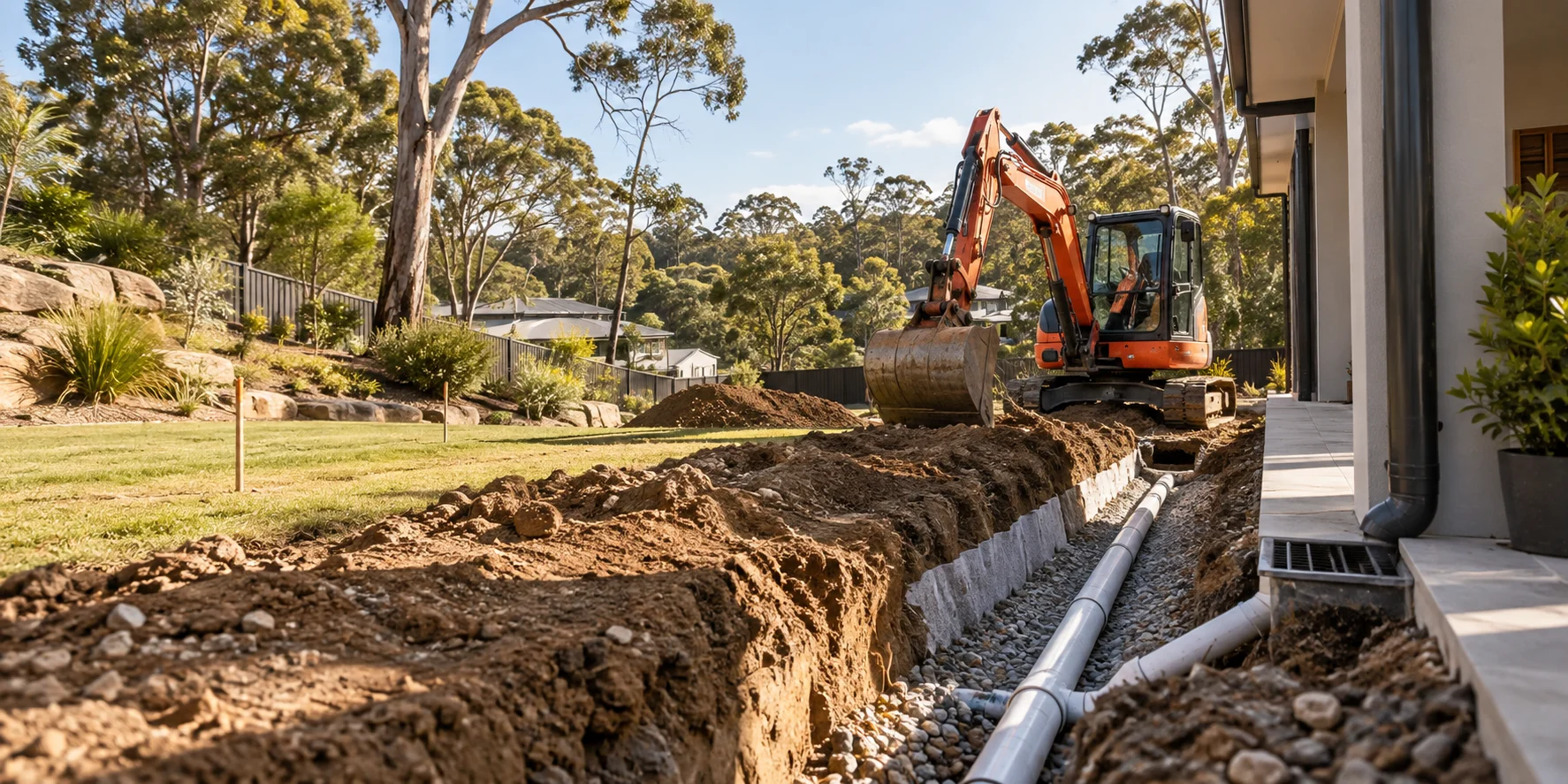
AI-generated illustration for Sutherland Shire Drainage Solutions, inspired by Sutherland Shire, NSW
DRAINAGE & WATER MANAGEMENT

Sutherland Shire Drainage Solutions

Start with the source of the water problem and develop a practical earthworks scope around the drainage design.

SUTHERLAND SHIRE, NSWRESIDENTIAL   /   COMMERCIALAI-generated site illustration
YOUR SITE. THE RIGHT APPROACH.

Drainage Solutions in Sutherland Shire

Every drainage problem has its own cause, and Sutherland Shire Drainage Solutions start with understanding how water moves across your property. We recommend and install the right combination of pits, pipes and subsoil drains.

Share your site layout, problem areas and any photos from recent rain. Early assessment helps us design a practical system that protects foundations, keeps paths and lawns usable and meets local requirements.

From Kirrawee and Miranda to Sylvania, Gymea and Cronulla, water issues affect homes of every age. Tidy excavation, quality materials and careful reinstatement give you a lasting fix.

Explore the scope ↓
01 Site review
and access
02 Clear written
scope
03 Defined site
handover
LET'S TALK ABOUT YOUR SITE

Get A Free Estimate

Tell us about the job. Save your project details, then call us to discuss a quote.

Your brief downloads to your device. No enquiry is sent. Call 00 0000 0000 to discuss your project. Privacy information.

Drainage Solutions Services in Sutherland

01

Understanding Water Movement

We assess how water moves across your site, checking roof runoff, ground levels, soil type and existing drains, identifying the real underlying cause of pooling or dampness so the final solution permanently targets the source rather than just the symptom.

02

Tailored Combination Systems

Pits, pipes, subsoil drains and soakwells are combined to suit your property, creating a practical system that handles heavy rain and protects foundations, saving you money on any unnecessary extras. We explain what each part does before any work begins.

03

Long-Lasting Installation

Quality materials, correct falls, accessible pits for cleaning and tidy excavation give you a drainage system that performs reliably, reduces future maintenance and protects your property investment, giving you peace of mind in storms. Disturbed surfaces are reinstated neatly afterwards.

WET YARD MYTHS

Common Drainage Solutions Mistakes in Sutherland Shire: How To Handle Them

The fix depends on where the water comes from, and two yards with identical puddles can have different causes.

01

Treating the puddle, not the source

A drain placed in the wet spot may only fill with the same water that keeps arriving. Trace it back uphill first. Catching water where it enters the yard, often along a boundary or below a slope, usually works better.

02

Assuming it is a pipe leak

Wet patches are often surface runoff or a high water table. A spot that stays wet even through dry weather suggests a leak; one that appears only after rain usually does not. A plumber can test pipes before you dig.

03

Regrading toward the house

A new garden bed or paving that falls back toward a wall can create a new problem. Raising garden soil above the damp-proof course can also let water into wall cavities and subfloors. Falls should run away from the building.

04

Moving it to the neighbour

A solution that pushes water across a boundary tends to come back as a dispute. Concentrated flow from a new pipe or regraded yard is easy to trace, so keep water on your lot until it reaches an approved discharge.

DIAGNOSING THE SOURCE

Four sources of unwanted water

Surface runoff

Water arrives from paving, driveways or the slope above during rain. Look for flow marks, leaf trails and silt along the path. Typical fixes are regrading, a dish drain or grated pits that catch it before it reaches the house.

Seepage from the slope

Damp patches that persist after dry spells can mean subsoil water moving downhill, often along a sandstone shelf or clay layer. It is common on sloping Shire blocks and usually needs a subsoil drain placed uphill of the wet area.

Leaking pipe or tank overflow

Constant wetness in dry weather points to a leak, or a tank or air-conditioner drain outlet. A plumber can pressure-test lines. Check the water meter with all taps off, and look for lush grass or soft ground over buried pipes.

High water table

Low blocks near a river, bay or canal can sit wet. Water that rises in a hole dug in the yard is a clue. Drains rarely lower groundwater, so fixes focus on raising levels, protecting structures and managing surface water.

SORTING THE PROBLEM

Drainage Solutions Experts in Sutherland Shire: How We Do The Job

  1. Photograph it in the rain

    Look at the yard during and after heavy rain. A video of the water path is more useful than a description. Note where it pools, how long it lasts, and whether it comes off roofs, paving or from next door.

  2. Find the entry point

    Walk the upslope boundary, downpipes, gutters, taps and any pits. Mark where water enters and where it goes. Overflowing gutters, disconnected downpipes and blocked pits are common and simple to fix, so rule them out before planning new drainage work.

  3. Pick the right tool

    Surface problems usually need grading or a surface drain; seepage needs a subsoil drain; leaks need a plumber. Low spots with no gravity outlet may need a sump. A correct diagnosis avoids building a drain that misses the real cause.

  4. Excavate to the drainage design

    Trenching, pits and falls are built to the agreed layout and connected to an approved discharge. Services are located first, spoil is managed so it does not block other flow paths, and a licensed plumber makes any connection to stormwater.

  5. Watch the first storm

    Check it during the first big rain and tweak any low spots before the surface is finished. Look for ponding, water bypassing pits and silt in the pipes. Small level changes are easy before turf, paving or mulch goes down.

WHAT TO GATHER

Information that speeds up the fix

  • Photos or video of the wet area during rain
  • Where the water is coming from, if you know
  • When the problem started or got worse
  • Any recent building, paving or landscaping nearby
  • Locations of downpipes, tanks and taps
  • Your approved plans or a survey, if you have them
  • Any Council or neighbour concerns about the water
  • Access for a small machine to the problem area
WHY CHOOSE US FOR DRAINAGE SOLUTIONS

Why Choose Our Drainage Solutions Experts

Every drainage problem has its own cause, so you need experts who diagnose before they dig. We study how water moves across your property, identify the real source of pooling or dampness and recommend the right combination of pits, pipes, subsoil drains and soakwells. Clear communication means you understand the plan, the options and the costs. With local knowledge of Sutherland Shire sloping blocks, rock and older homes, we install systems that perform in real storms. Careful excavation, quality, long-lasting materials and tidy reinstatement give you a lasting fix that protects foundations, paths and lawns and reduces future maintenance costs.

Talk to our team ↗
AI-generated illustration of drainage solutions works in Sutherland Shire
WHEN APPROVAL MATTERS

Not every fix is DIY or exempt

Drainage that discharges to the street, crosses a boundary, or affects a creek or neighbour may need Council involvement. Raising ground levels or redirecting overland flow can also need consent, so check before any digging. Plumbing connections are licensed work.

  • Check with Council or your certifier before changing where water leaves your lot
  • Never connect stormwater to the sewer
  • A hydraulic engineer can design larger or more complex systems
ASKED ABOUT DRAINAGE SOLUTIONS

Frequently
Asked Questions

Surface falls, water entry points and downstream connections.

Ask us about your project ↗
01Can you tell me what is causing my wet yard?+

An inspection of the site and the rain path is the first step. Where it is unclear, a plumber or hydraulic engineer can help with the diagnosis.

02Will a drain always fix a soggy lawn?+

Not always. If the cause is surface runoff, regrading may do more than a drain. If it is a leak, no drain will fix it.

03Is a drainage design required?+

For anything more than minor work, ask your certifier or Council. Many jobs benefit from a simple plan even if one is not required.

DRAINAGE & WATER MANAGEMENT

Let’s start your drainage solutions project.

Share the address, the access and the result you need.
Details first. Then a plan that suits the site.

Start a conversation ↗00 0000 0000