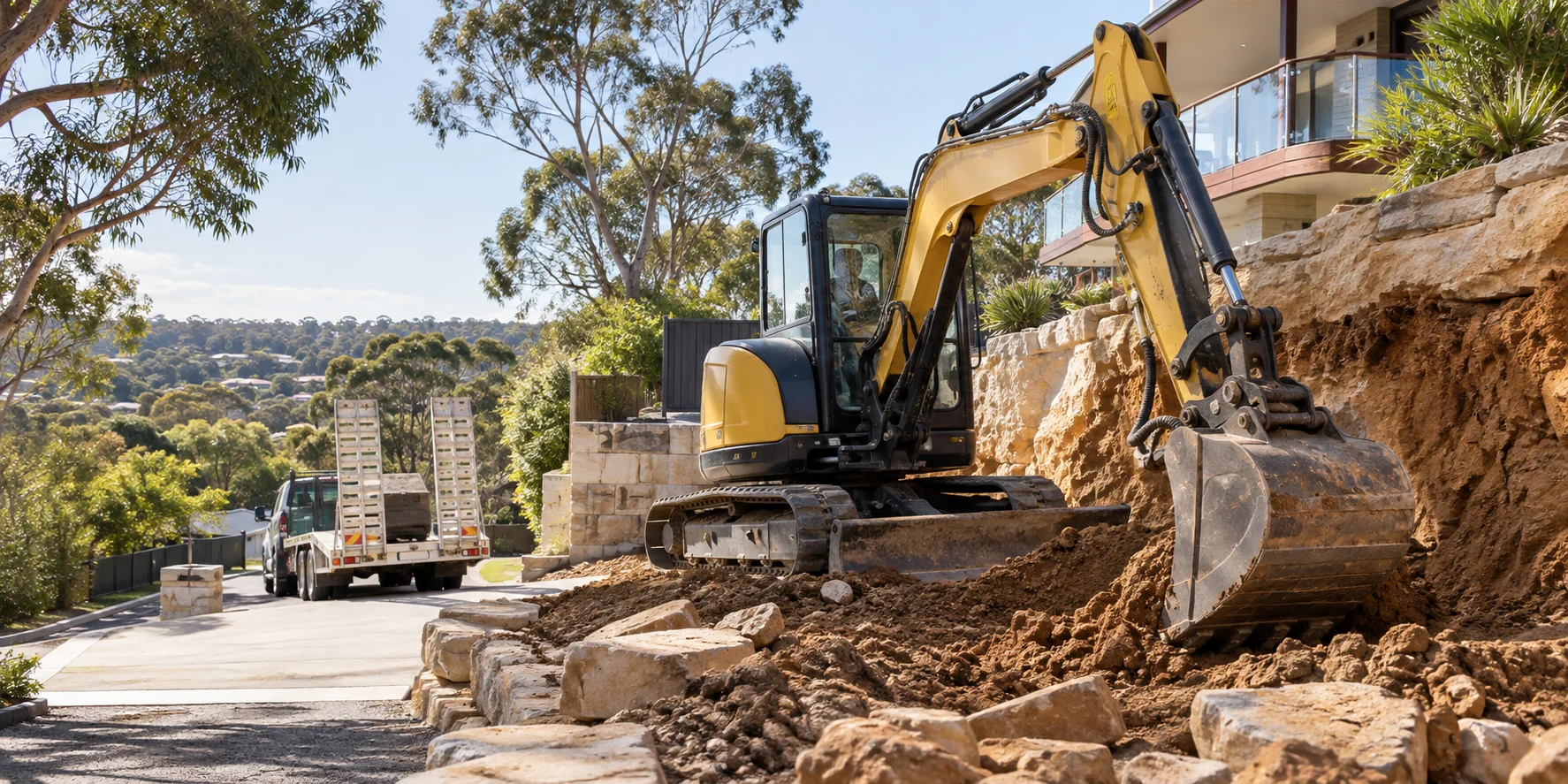
- Tonne class
- The approximate operating weight of the machine, used to compare size and transport needs. Heavier classes dig deeper and lift more, but need wider access, stronger driveways and larger transport, so the chosen class should suit the site and job.
- Tail swing
- How far the back of the machine swings out when it turns. Conventional machines can hit walls and fences behind them. Zero or reduced tail swing models suit tight yards, narrow streets and work close to houses, fences and boundaries.
- Quick hitch
- A coupler that lets the operator swap buckets and attachments quickly, often without leaving the cab. Couplers must be correctly locked and checked after every change, because an attachment that falls off can seriously injure anyone standing nearby on site.
- Batter
- The sloping side of an excavation, cut back to reduce collapse risk. The safe angle depends on the soil type, moisture and depth, and deeper or unstable digs may need shoring or engineering advice instead of relying on battering alone.
- Spoil
- Excavated material that has to be stockpiled, reused or removed. Spoil expands once dug, so it needs more room and more truck loads than the hole suggests, and it may need waste classification before it is allowed to leave site.