CONSIDERED DEMOLITION. EXCEPTIONAL POSSIBILITIES.LET’S TALK ABOUT YOUR SITE ↗ 00 0000 0000
Sutherland Shire Demolition
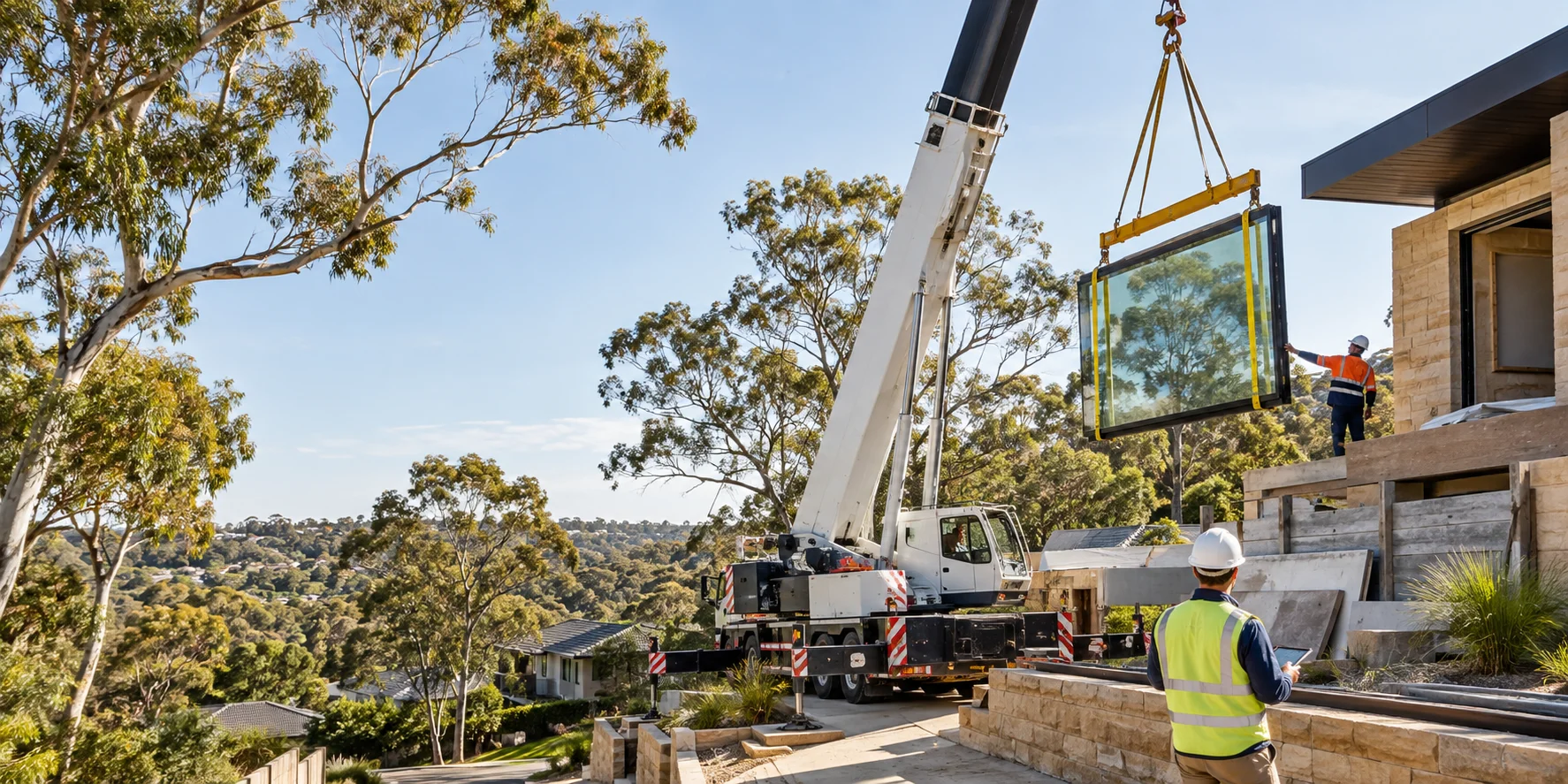
AI-generated illustration for Sutherland Shire Lifting Needs, inspired by Sutherland Shire, NSW
EQUIPMENT & SPECIALIST WORKS

Sutherland Shire Lifting Needs

Discuss the loads and placement requirements of your project before selecting suitable lifting support.

SUTHERLAND SHIRE, NSWRESIDENTIAL   /   COMMERCIALAI-generated site illustration
YOUR SITE. THE RIGHT APPROACH.

Lifting Needs in Sutherland Shire

Some jobs require more than digging, and Sutherland Shire Lifting Needs covers placing pipes, tanks, pavers, steel and other heavy items safely on site. We plan each lift around access, weight and ground conditions.

Tell us what needs to be lifted, its weight and where it must go. Early planning of machine position, rigging and safe working zones keeps people protected and avoids damage to materials and property.

Across Caringbah, Gymea, Kirrawee, Miranda and Cronulla, tight sites often need careful positioning. Experienced operators and appropriate equipment place your materials accurately and keep your build moving.

Explore the scope ↓
01 Site review
and access
02 Clear written
scope
03 Defined site
handover
LET'S TALK ABOUT YOUR SITE

Get A Free Estimate

Tell us about the job. Save your project details, then call us to discuss a quote.

Your brief downloads to your device. No enquiry is sent. Call 00 0000 0000 to discuss your project. Privacy information.

Lifting Needs Services in Sutherland

01

Heavy Item Placement

We lift and place pipes, tanks, steel, pavers and other heavy materials accurately on site, using slings, chains and lifting attachments suited to each load, saving you the cost and risk of manual handling, so your project keeps moving forward.

02

Safe Lift Planning

Each lift is planned around weight, reach, ground conditions and access, along with any overhead powerlines, tree branches and nearby structures, ensuring people, materials and surrounding property are protected from start to finish, on every single job, large or small.

03

Suitable for Tight Sites

Restricted access does not have to stop your project, as we position machines carefully to place materials exactly where they are needed, including over fences and onto elevated or steeply sloping ground, without damaging your property, saving cost and stress.

READ THIS FIRST

Lifting is high-risk work

Cranes, dogging and many lifts are classed as high-risk work in NSW. Safe Work Method Statements are generally required and the people doing the lift should hold the correct licences. Ask the contractor to confirm this in writing before booking.

  • Overhead power lines have mandatory exclusion zones
  • Never stand under a suspended load
  • Lifts should have a lift plan, not just an on-the-day decision
PLANNING A LIFT

Lifting Needs Experts in Sutherland Shire: How We Do The Job

  1. Establish the load

    Weigh or confirm the weight of the object, including rigging. Guessing is how overloading happens. Use a manufacturer's plate, supplier docket or engineer's figure, and remember that slings, shackles and spreader bars all add to the total load being lifted.

  2. Measure the radius

    Work out how far from the machine the load starts and finishes. Capacity drops as radius increases. Measure out to the furthest point the load must travel, because the whole lift is governed by the worst position, not the average.

  3. Check the ground

    Cranes and loaded machines need firm, level, compacted ground. Soft soil, slopes and buried services are risks. Pits, sewer lines, recent backfill and retaining walls near outrigger positions should be identified so the contractor can assess ground bearing capacity beforehand.

  4. Identify overhead hazards

    Power lines, trees and eaves limit boom movement. Establish the exclusion zones before arrival. Where the boom or load could come near overhead lines, the local electricity network operator may need to be contacted well before the planned lift date.

  5. Write the lift plan

    Position, sequence, signals, exclusion area and a person in charge. This should exist before the lift. Everyone involved should read and understand it, and the plan should be reviewed if conditions change on the day, such as wind or rain.

WHAT TO TELL THE LIFTER

Information a Lift Needs

What it is

Steel beam, tank, precast panel or machine: the shape, lifting points and condition all matter. Awkward shapes can swing or tilt once lifted, and corroded or damaged lugs may not be safe to rig from, so describe their condition honestly.

Weight

Look for a manufacturer's weight, supplier docket or engineer's figure. If none exists, ask the fabricator or supplier to calculate one. Tanks may hold water or sludge, and old items can carry concrete or fittings that add significant hidden weight.

From and to

Where it sits now and where it has to go, with approximate distances. Note any height change, such as onto a roof, over a fence or into a basement, because lifting over obstacles changes the radius and the equipment needed.

Access

Street width, gates, overhead obstructions and where a crane or truck could stand. Mention steep driveways, kerb heights and parked cars, and whether part of the road or footpath may need closing with Council approval and a traffic control plan.

Other people

Neighbours, pedestrians and trades on site may need to be kept out of the lift zone. Plan barriers, spotters and timing so nobody walks under the load, and give neighbours notice if driveways or footpaths are blocked during the lift.

How it lands

Say how the item must be set down: which way it faces, what it sits on, and whether packers, bolts or temporary bracing are needed before the slings come off. Have the receiving trade ready so the load is not left hanging.

LIFTING MISTAKES

Common Lifting Needs Mistakes in Sutherland Shire: How To Handle Them

01

Underestimated weight

Wet concrete, steel and water-filled tanks weigh more than they look. Get a real figure. Estimating by eye is unreliable, and a load that turns out heavier than planned can push the machine beyond its rated capacity at that radius.

02

Soft or uneven ground

Outriggers or tracks can sink or tilt. A level, compacted hardstand or spreader mats may be needed. Recently backfilled trenches, soft lawns and old septic tanks are common hidden weak points under a machine standing on a typical residential block.

03

Power lines overlooked

Contact or arcing from overhead lines can be fatal. Exclusion zones apply even if the load does not touch. Electricity can jump across a gap, so boom, ropes and load must all stay outside the required distance at every stage.

04

No clear communication

Operator, dogman and ground crew need agreed signals and one person directing. Confusion over who gives instructions is a common cause of incidents. Confirm hand signals or radio channels beforehand, and stop the lift if anyone loses sight or contact.

LIFT DAY READINESS

Lift Preparation Checklist

  • Confirm load weight and lifting points
  • Measure the radius from machine to set-down
  • Check ground and clear a firm, level standing area
  • Identify overhead lines and set exclusion zones
  • Confirm who is the competent person for rigging and signals
  • Keep the public and other trades clear of the lift zone
  • Check the machine can reach its set-up position
  • Agree lift timing with all trades on site
WHY CHOOSE US FOR LIFTING NEEDS

Why Choose Our Lifting Needs Experts

Heavy lifts need planning, not improvisation, and our experts treat every lift seriously. We assess item weight, reach, ground conditions and access, then position machines and rigging to protect people, materials and property. Pipes, tanks, steel, pavers and other heavy items are placed accurately where you need them, saving the cost and risk of manual handling. Clear communication keeps your site team informed and safe. With local knowledge of Sutherland Shire tight sites and restricted access, we find safe, practical solutions that keep your build moving, giving you confidence that heavy materials will be placed correctly and safely without damage.

Talk to our team ↗
AI-generated illustration of lifting needs works in Sutherland Shire
WHICH LIFT SUPPORT

Excavator Lift or Mobile Crane?

Excavator lifting

  • Suits light to moderate loads close in
  • Must be rated and fitted for lifting
  • Needs a competent dogman
  • Limited reach and capacity

Mobile crane

  • Suits heavy or distant loads
  • Needs a licensed operator and lift plan
  • Needs level compacted hardstand
  • Takes more space and set-up time

Share the load, radius and site layout and ask the contractor to recommend equipment and confirm it is suitable.

ASKED ABOUT LIFTING NEEDS

Frequently
Asked Questions

Load weight, lift radius and ground conditions.

Ask us about your project ↗
01Can an excavator lift anything?+

No. It must be rated and fitted for lifting, with rated lifting points, check valves and a load chart. Ask the contractor to confirm this for your job.

02Do I need a lift plan for a small job?+

High-risk lifting generally needs planned controls and a SWMS. A short plan is better than none; ask the contractor what they require.

03What if there are power lines nearby?+

Exclusion zones apply. The contractor and the network owner may need to be involved before any lift goes ahead.

04How do I find the weight of what I want lifted?+

Check supplier dockets, manufacturer data or ask the engineer or fabricator. Do not rely on an estimate.

EQUIPMENT & SPECIALIST WORKS

Let’s start your lifting needs project.

Share the address, the access and the result you need.
Details first. Then a plan that suits the site.

Start a conversation ↗00 0000 0000