CONSIDERED DEMOLITION. EXCEPTIONAL POSSIBILITIES.LET’S TALK ABOUT YOUR SITE ↗ 00 0000 0000
Sutherland Shire Demolition
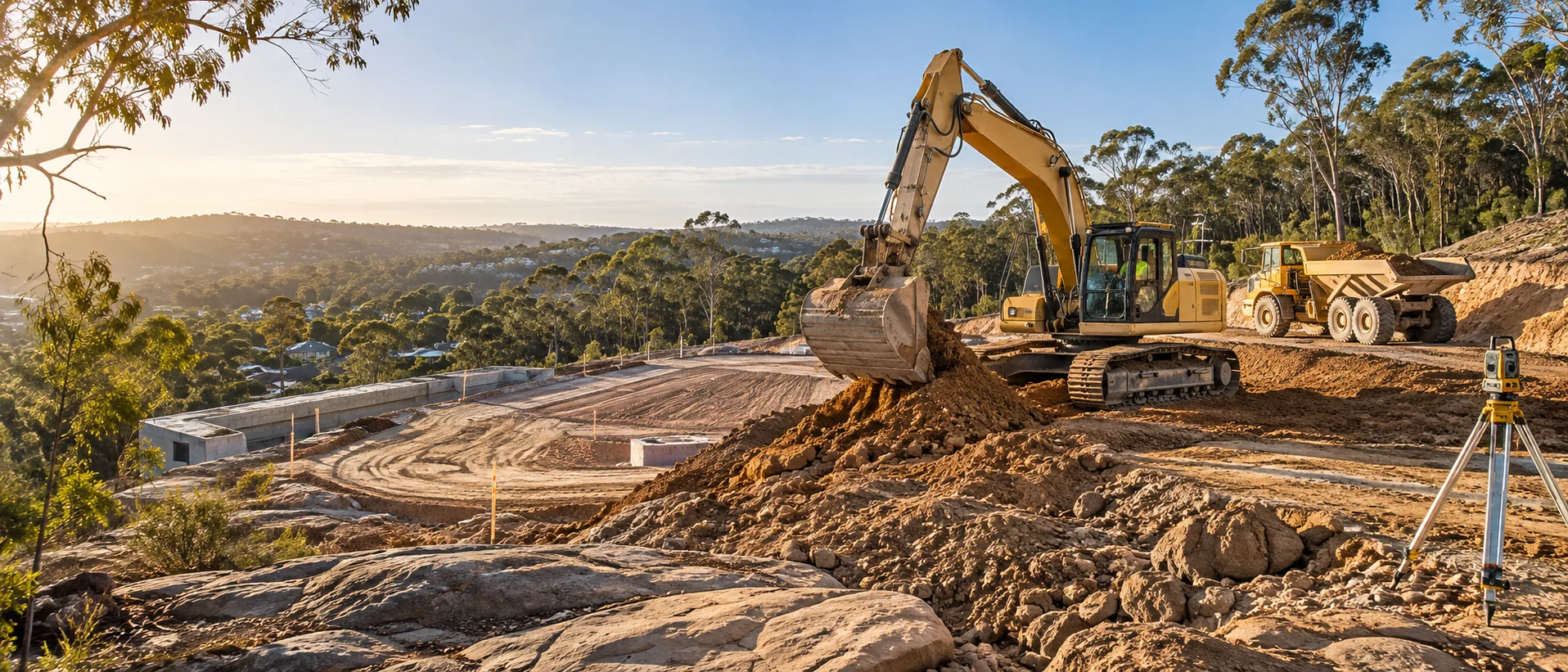
AI-generated illustration for Sutherland Shire Civil Earthworks, inspired by Sutherland Shire, NSW
EARTHWORKS & SITE MANAGEMENT

Sutherland Shire Civil Earthworks

Discuss larger earthmoving packages with the drawings, staging and documentation needs established early.

SUTHERLAND SHIRE, NSWRESIDENTIAL   /   COMMERCIALAI-generated site illustration
YOUR SITE. THE RIGHT APPROACH.

Civil Earthworks in Sutherland Shire

Roads, drainage and infrastructure rely on well-prepared ground, and Sutherland Shire Civil Earthworks delivers excavation, filling and compaction to engineering standards. We build the foundations that public and private works depend on.

Share your plans, specifications and site constraints. Early planning of staging, material supply and traffic control helps keep the project on schedule and within compliance requirements.

Across Sutherland, Kirrawee, Miranda, Caringbah and Cronulla, civil projects often work around live services and busy roads. Skilled operators and careful management deliver accurate, durable results.

Explore the scope ↓
01 Site review
and access
02 Clear written
scope
03 Defined site
handover
LET'S TALK ABOUT YOUR SITE

Get A Free Estimate

Tell us about the job. Save your project details, then call us to discuss a quote.

Your brief downloads to your device. No enquiry is sent. Call 00 0000 0000 to discuss your project. Privacy information.

Civil Earthworks Services in Sutherland

01

Engineering Standard Compaction

Excavation, filling and compaction are completed to specification, with layers placed and tested as the design specification requires, giving roads, drainage and infrastructure the stable foundation they need to perform safely over many years, saving you maintenance costs over time.

02

Staging and Material Supply

We plan work stages and material supply carefully, confirming quantities and delivery times with our suppliers in advance, keeping the project on schedule and minimising delays caused by missing materials or poorly sequenced works, keeping crews productive and budget protected.

03

Working Around Live Services

Civil sites often include existing utilities and traffic, so we work carefully around both, following approved traffic control plans and marked underground service locations, protecting services and keeping workers and the public safe, saving you disruption and very costly repairs.

READING CIVIL DRAWINGS

Civil Earthworks Terms That You Need To Know

Civil packages are driven by drawings and specifications. Knowing the words helps you check a quote.

Bulk earthworks
Large-scale cut and fill to form the overall site shape. On larger sites it usually involves excavators, dozers, rollers and trucks working to design levels, and comes before detailed trimming, service trenching and pavement construction on roads, pads and subdivisions.
Cut-to-fill balance
Matching excavated volume to the fill needed so less is imported or exported. Designers calculate it from survey, but bulking, compaction and unsuitable material change real volumes, so the balance should be rechecked regularly as work progresses and stockpiles change.
Subgrade CBR
California Bearing Ratio, a measure of subgrade strength used to design pavement depth. Lower values generally mean thicker pavement. Testing is done by a geotechnical provider, and actual results on site may differ from assumptions made at the design stage.
Survey control
Fixed marks the whole job is set out from. Machines and checks refer back to them. Protect these marks from plant and traffic, because a disturbed benchmark can quietly shift levels across the whole site. Report any damaged mark immediately.
Specification
The written requirements for materials, compaction and tolerances. It sits alongside the drawings and often decides testing frequency and acceptable fill. Read it closely before pricing or starting work, because it sets quality standards the contractor will be measured against.
CIVIL PACKAGE FLOW

Civil Earthworks Experts in Sutherland Shire: How We Do The Job

  1. Document review

    Read the drawings, specification and geotechnical report together. Clarify anything that conflicts. Send written questions to the designer or head contractor, record the answers in a register, and confirm you hold the current drawing revisions before pricing or ordering materials.

  2. Survey control and set-out

    Establish benchmarks and mark the footprint, levels and batters before machines move. A registered surveyor usually sets the control, and machine guidance models should be checked against it before excavation starts so errors are caught before they are built in.

  3. Locate existing services

    Lodge Dial Before You Dig and pothole where water, gas, power and communications cross the work area. Older sites may hold abandoned or unrecorded lines, and some asset owners require notice, a permit or a supervisor on site before excavation nearby.

  4. Environmental controls

    Sediment and erosion measures go in first, and are maintained for the whole job. As the site shape changes, controls often need moving, extending or adding, so review them at each stage and inspect them after every significant rain event.

  5. Clear and strip topsoil

    Remove vegetation, then strip topsoil and organic material from areas to be cut, filled or paved. Stockpile it within the sediment controls for reuse on batters and verges, and keep it separate from material intended for engineered fill or export.

  6. Bulk cut and fill

    Excavate, haul and place in layers, with proof rolling and testing as the specification requires. Track volumes daily against the design, keep unsuitable material separate from good fill, and report unexpected rock, groundwater or soft ground to the engineer promptly.

  7. Drainage and services

    Install stormwater, culverts and conduits to line and level before finishing the surface. Pipes need correct bedding, haunching and backfill, and Council or another asset owner may require inspection or testing before acceptance, so confirm requirements early before covering anything.

  8. Trim and verify

    Finish to tolerance, and confirm levels by survey as the hold point for the next trade. Provide as-built levels and test results together, and fix any out-of-tolerance areas before handover rather than leaving them for the following trade to discover.

WHAT CIVIL JOBS CAN INCLUDE

Typical civil earthworks scopes

Access roads and hardstand

Formation, geotextile on soft ground and compacted crushed rock to a design crossfall. Crossfall sheds water sideways to table drains, kerbs or pits, and the pavement depth depends on subgrade strength and the volume and type of vehicle traffic expected.

Drainage channels and culverts

Excavation and bedding for pipes and headwalls. Works near watercourses may need consent. Inlets and outlets need scour protection such as rock, and pipe grades must be accurate so water flows freely without ponding or sediment build-up inside the pipe.

Batters and embankments

Shaped slopes set to a design angle, compacted and stabilised against erosion. The engineer sets the angle from soil type, groundwater and batter height, and finished faces are usually covered with topsoil, seed, mesh or rock protection soon after shaping.

Subdivision lot formation

Grading building pads and service corridors to civil drawings. Work typically includes lot levels, road formation and trenching for water, sewer and power, coordinated with the relevant authorities and finished with compaction records for future house builders and their engineers.

DOCUMENTATION

Verbal agreement vs paper trail

What you should hold

  • Drawings and specification revisions
  • Survey as-built levels
  • Compaction and material test results
  • Waste and spoil dockets

What goes wrong without it

  • Disputes about volumes and levels
  • Failed certification
  • Rework after the next trade finds an error
  • Trouble proving where soil went

Hold a signed-off set of records at each hold point.

WHY CHOOSE US FOR CIVIL EARTHWORKS

Why Choose Our Civil Earthworks Experts

Roads, drainage and infrastructure depend on well-prepared ground, and our civil earthworks experts build to engineering standards. We complete excavation, filling and compaction to specification, giving your project a stable, long-lasting foundation. Work stages and material supply are planned carefully to keep you on schedule, and we work around live services and traffic with safety as the top priority. Clear communication and thorough documentation keep engineers, supervisors and clients informed. With local knowledge of Sutherland Shire roads, services and council requirements, we deliver accurate, compliant results that support both public and private projects and reduce long-term maintenance costs over time.

Talk to our team ↗
AI-generated illustration of civil earthworks works in Sutherland Shire
WATERCOURSES AND APPROVALS

Check before working near water

Works in or near a creek or waterway may need Council consent and, for some creeks, permission from NSW agencies. Sediment must not leave the site. Confirm approvals before mobilising, and stage the work around forecast rain to limit disturbance.

  • Confirm approvals in the design package
  • Check who holds responsibility for them
  • Plan scour protection at inlets and outlets
AFTER CIVIL EARTHWORKS

Other Related Services

Site work is a sequence. These are the services most often discussed alongside or straight after this one.

All services ↗
ASKED ABOUT CIVIL EARTHWORKS

Frequently
Asked Questions

Civil design, survey control and project specifications.

Ask us about your project ↗
01Do you take on large civil packages?+

Larger jobs are discussed case by case. Send drawings and specifications so scope, staging and availability can be reviewed.

02What documents do you need to quote?+

Drawings, specification, geotechnical report and survey information give the best picture. Without them, a quote will be limited to assumptions.

03Who provides survey set-out?+

Often the head contractor or a surveyor. Machine guidance can help, but it supports rather than replaces survey checks.

EARTHWORKS & SITE MANAGEMENT

Let’s start your civil earthworks project.

Share the address, the access and the result you need.
Details first. Then a plan that suits the site.

Start a conversation ↗00 0000 0000