CONSIDERED DEMOLITION. EXCEPTIONAL POSSIBILITIES.LET’S TALK ABOUT YOUR SITE ↗ 00 0000 0000
Sutherland Shire Demolition
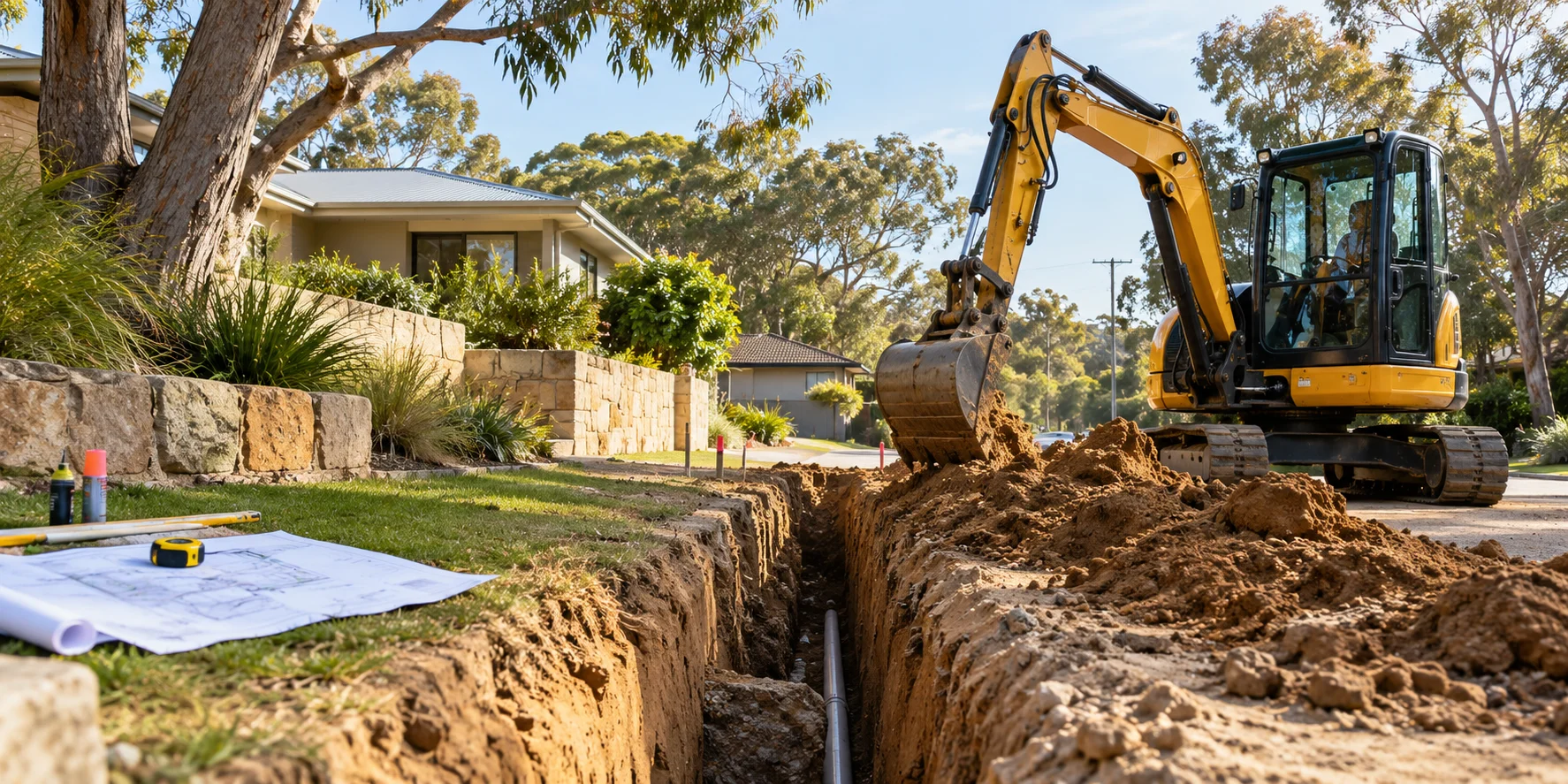
AI-generated illustration for Sutherland Shire Trenching, inspired by Sutherland Shire, NSW
CIVIL & UTILITY WORKS

Sutherland Shire Trenching

Create practical service routes with controlled excavation and reinstatement planning.

SUTHERLAND SHIRE, NSWRESIDENTIAL   /   COMMERCIALAI-generated site illustration
YOUR SITE. THE RIGHT APPROACH.

Trenching in Sutherland Shire

Reliable services start with a clean, correctly sized trench, and Sutherland Shire Trenching is dug to your plans for water, gas, drainage and conduit. We control depth, width and grade so installers can work efficiently.

Send us your drawings, route and access details. Marking out in advance and checking for existing services helps us avoid conflicts, keep the trench safe and meet inspection requirements.

Across Sutherland, Jannali, Menai, Engadine and Cronulla, trench routes often cross lawns, driveways and rock. The right machine and a tidy backfill leave your property neat and ready for the next stage.

Explore the scope ↓
01 Site review
and access
02 Clear written
scope
03 Defined site
handover
LET'S TALK ABOUT YOUR SITE

Get A Free Estimate

Tell us about the job. Save your project details, then call us to discuss a quote.

Your brief downloads to your device. No enquiry is sent. Call 00 0000 0000 to discuss your project. Privacy information.

Trenching Services in Sutherland

01

Accurate Depth and Width

We dig clean trenches to your specified dimensions for water, gas, drainage and conduit, keeping the trench base even and free of loose rock, giving installers a consistent workspace that meets installation and inspection requirements, saving everyone time and money.

02

Route Marking and Service Checks

Trench routes are marked in advance and checked for existing services, using Before You Dig plans and on-site locating where needed, helping us avoid conflicts, keeping the work safe and reducing delays on your project, saving you cost and stress.

03

Tidy Backfill and Reinstatement

After installation, trenches are backfilled and compacted properly in thin layers with suitable material to limit later sinking, leaving lawns, driveways and garden areas neat and ready for repair, resurfacing or planting, saving you the cost and trouble of repairs.

WHAT GOES IN THE GROUND

Trenches for every kind of service

Water supply lines

Poly water pipe to a new tap, shed or granny flat. Depth and bedding depend on the pipe type and the plumber. Keep it clear of power and gas runs, and lay warning tape above it to alert future diggers.

Stormwater and drainage

Stormwater needs a consistent fall to the discharge point, so the levels have to be right and not just approximately deep enough. The discharge point, whether kerb, easement or absorption pit, should be confirmed with the plumber or Council first.

Power and data conduit

Electrical and communications trenches follow the specifications of the installer and the network. See the dedicated cabling page for the details. The electrician or cabler should confirm depth, conduit and separation from other services in writing before the trench opens.

Gas

Gas lines are installed by a licensed gasfitter to their requirements, with separation from other services. Ask the gasfitter for the depth, bedding and route before digging starts, and expect hand digging near the meter and any live gas connection.

Irrigation

Shallow trenches with many branches. The key is mapping the layout first, so the machine does not cut across the same spots twice. Plan zones, valve boxes and controller wiring together, and photograph the runs before backfilling for future reference.

Subsoil drainage

Slotted ag pipe in a gravel-filled trench collects groundwater behind retaining walls, along footings or under soggy lawns. It still needs a fall and a lawful outlet, and a filter sock or geotextile wrap stops fine soil from clogging it over time.

MACHINE OR HAND

Machine trench versus hand dig

Compact excavator

  • Fast over longer runs of 10 m or more
  • Consistent width and depth with the right bucket
  • Fits through gates under about 1 m with narrow-track models
  • Needs room to place spoil beside the trench

Hand digging

  • Best near live services and root zones
  • Used to pothole and confirm the exact utility position
  • Slow and tiring over longer lengths
  • Avoids damage to pavers, pipes and fine landscaping

Most jobs use both. The machine does the open run and hands take over near existing services and retained tree roots.

LEARN FROM OTHERS

Common Trenching Mistakes in Sutherland Shire: How To Handle Them

01

Hitting an unmapped service

Dial Before You Dig plans are indicative. Private pool plumbing, irrigation, private stormwater and old septic lines are not on them, so ask the owner and pothole where unsure. A private locator with detection equipment can trace many of these.

02

Sandy walls collapsing

Dune and sandy soils near Cronulla fall in easily, even in shallow trenches. Keep the opening short and do not stand or stack spoil along the edge. Battering the sides or using trench shields protects workers and the new pipe.

03

Water filling the trench

After rain or on low ground, trenches can fill. Ask how it will be managed, and be careful when pipes or cables need dry bedding. Pumped water should be filtered so sediment does not reach the street or drainage pits.

04

Digging through tree roots

Cutting major roots of a retained tree can damage or destabilise it. Re-route or hand-dig under roots, and check with an arborist. Council may also have rules covering significant trees, so confirm what applies before work starts near the trunk.

05

Patchy backfill

Loose, dumped backfill settles over months and leaves a visible dip in lawn or paving. Compaction in layers is what prevents it. A small plate compactor or rammer suits narrow trenches, with the topsoil kept aside for the final layer.

06

Hitting sandstone

Much of the Shire has sandstone close to the surface, and a bucket alone may not get through it. Ask how rock will be handled, whether by breaker, rock saw or rerouting, and how it is priced if found partway along the run.

WHY CHOOSE US FOR TRENCHING

Why Choose Our Trenching Experts

A clean, correctly sized trench makes every service installation easier, and our trenching experts deliver exactly that. We dig to your specified depth, width and grade for water, gas, drainage and conduit, marking routes in advance and checking for existing services. Safe working practices protect our team, your property and your neighbours. Clear communication keeps your plumber, electrician or installer informed and ready. With local knowledge of Sutherland Shire lawns, driveways, rock and tight access, we choose the right machine for each route, then backfill and compact neatly and thoroughly so your property is ready for reinstatement, resurfacing or planting.

Talk to our team ↗
AI-generated illustration of trenching works in Sutherland Shire
TRENCH TALK

Trenching Terms That You Need To Know

Invert
The internal bottom level of a pipe, used to set the grade. Plumbers quote invert levels at each end of a run, and the trench floor is dug carefully to suit, allowing extra depth for the bedding material placed underneath.
Potholing
Small hand-dug or vacuum holes to expose a service and confirm where it is. Potholing gives the true depth and position, which plans alone cannot confirm, and is standard practice before machine digging near buried cables, gas or water lines.
Bedding
The fine sand or screenings layer a pipe rests on in the trench. It spreads the load evenly, keeps sharp rocks off the pipe and lets the plumber set accurate grades. The pipe installer specifies the bedding material and thickness.
Reinstatement
Returning the surface to an agreed finish after backfilling. It might mean topsoil and seed, turf, pavers or a concrete patch. Write the exact finish and materials into the quote, because reinstatement is often where expectations and prices differ most.
Warning tape
Coloured tape laid above a service to warn future diggers. It sits in the backfill a set distance above the pipe or conduit, and its colour and printed wording usually help identify the service type, such as electrical or gas.
Spoil
The soil and rock dug out of the trench. It is placed back from the edge so it does not fall in or load the walls. Agree whether it is reused as backfill or taken away, because rocky or clay spoil may not suit the pipe zone.
ASKED ABOUT TRENCHING

Frequently
Asked Questions

Service plans, trench depth and access restrictions.

Ask us about your project ↗
01How wide and deep does the trench need to be?+

That is set by the pipe or cable specification, so it varies. Ask the plumber, electrician or installer for their requirements before the dig starts.

02Can you trench through my lawn without wrecking it?+

You can limit damage by cutting turf in strips, stockpiling topsoil separately and replacing it in order. Ask for this method if the lawn matters.

03What if you hit something unexpected?+

Work should stop so the service can be identified before it is damaged. That is why a Dial Before You Dig check and hand-digging near suspected lines are worth it.

04Do I need to be home?+

It is useful for the start, to confirm routes and any private services. Photographs and a marked-up sketch can help if you cannot attend.

CIVIL & UTILITY WORKS

Let’s start your trenching project.

Share the address, the access and the result you need.
Details first. Then a plan that suits the site.

Start a conversation ↗00 0000 0000