- SWMS
- Safe Work Method Statement, a written plan for high-risk work. It lists each task, the hazards involved and the controls used, and workers should read and sign it. If the method changes on site, the SWMS is reviewed and updated.
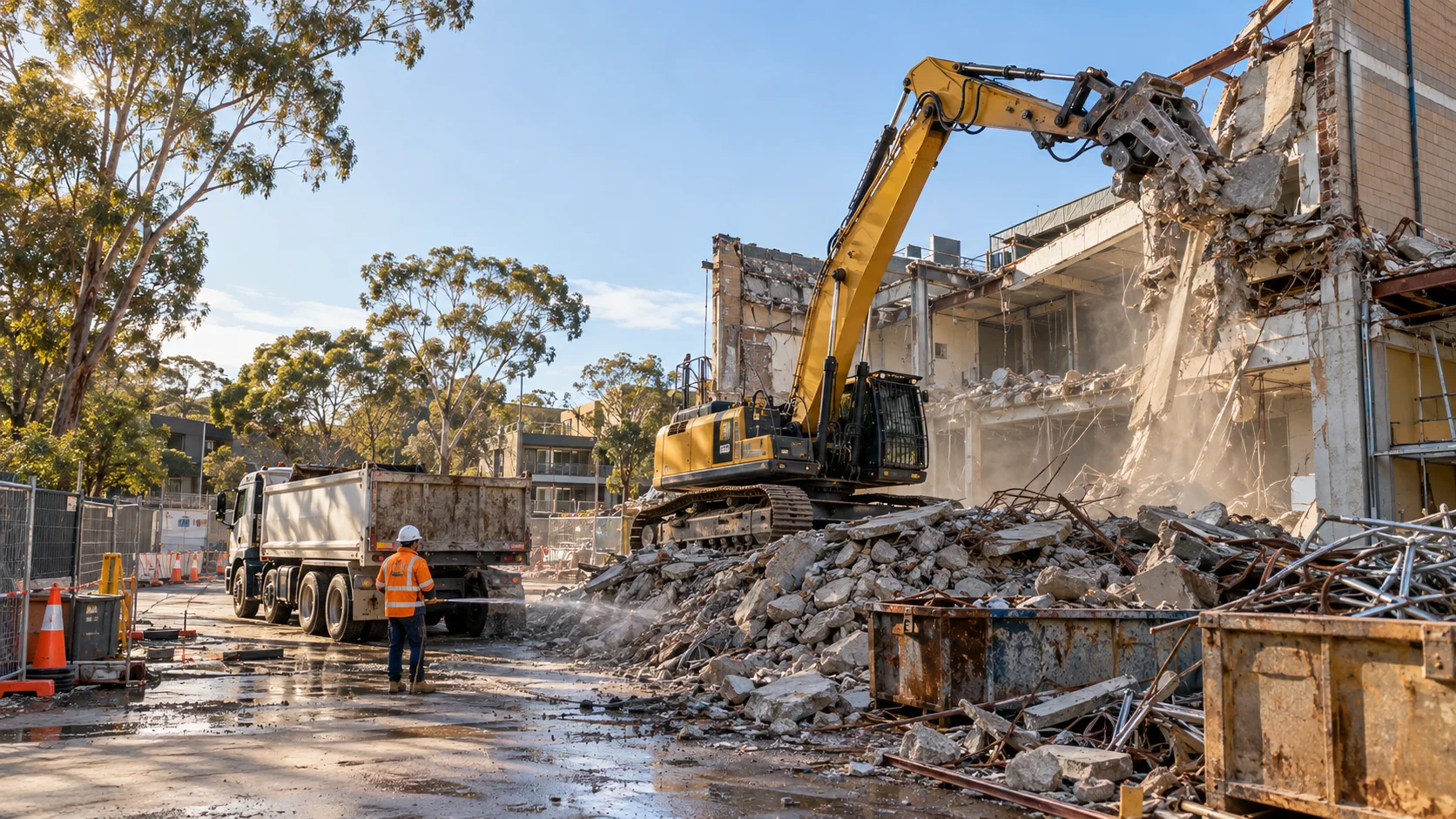
- Exclusion zone
- A marked area where only authorised workers may enter during demolition. It is set by the reach of machines and the fall zone of debris, fenced or taped off, and usually watched closely by a spotter while work is underway.
- Make good
- Repair of adjoining surfaces after removal work. It can cover patching walls, floors and ceilings where fixtures were taken out, and leases often specify the standard. Confirm in writing whether make good is in the demolition scope or priced separately.
- Hoarding
- Temporary solid fencing around a site, often to a public footpath. It contains dust and debris and keeps pedestrians separated from work. Hoardings on Council land or footpaths usually need a permit, and some must include overhead protection for passers-by.
- Cut-off
- The point where a service is isolated from the main supply. It should be clearly tagged and recorded so the crew knows exactly where live supply ends, and so services feeding neighbouring tenancies are not cut by mistake during work.
- Principal contractor
- The party with overall responsibility for managing safety on a larger construction project under NSW work health and safety laws. It coordinates inductions, site rules and the safety management plan, so confirm early whether the builder or the demolition contractor holds that role.