CONSIDERED DEMOLITION. EXCEPTIONAL POSSIBILITIES.LET’S TALK ABOUT YOUR SITE ↗ 00 0000 0000
Sutherland Shire Demolition
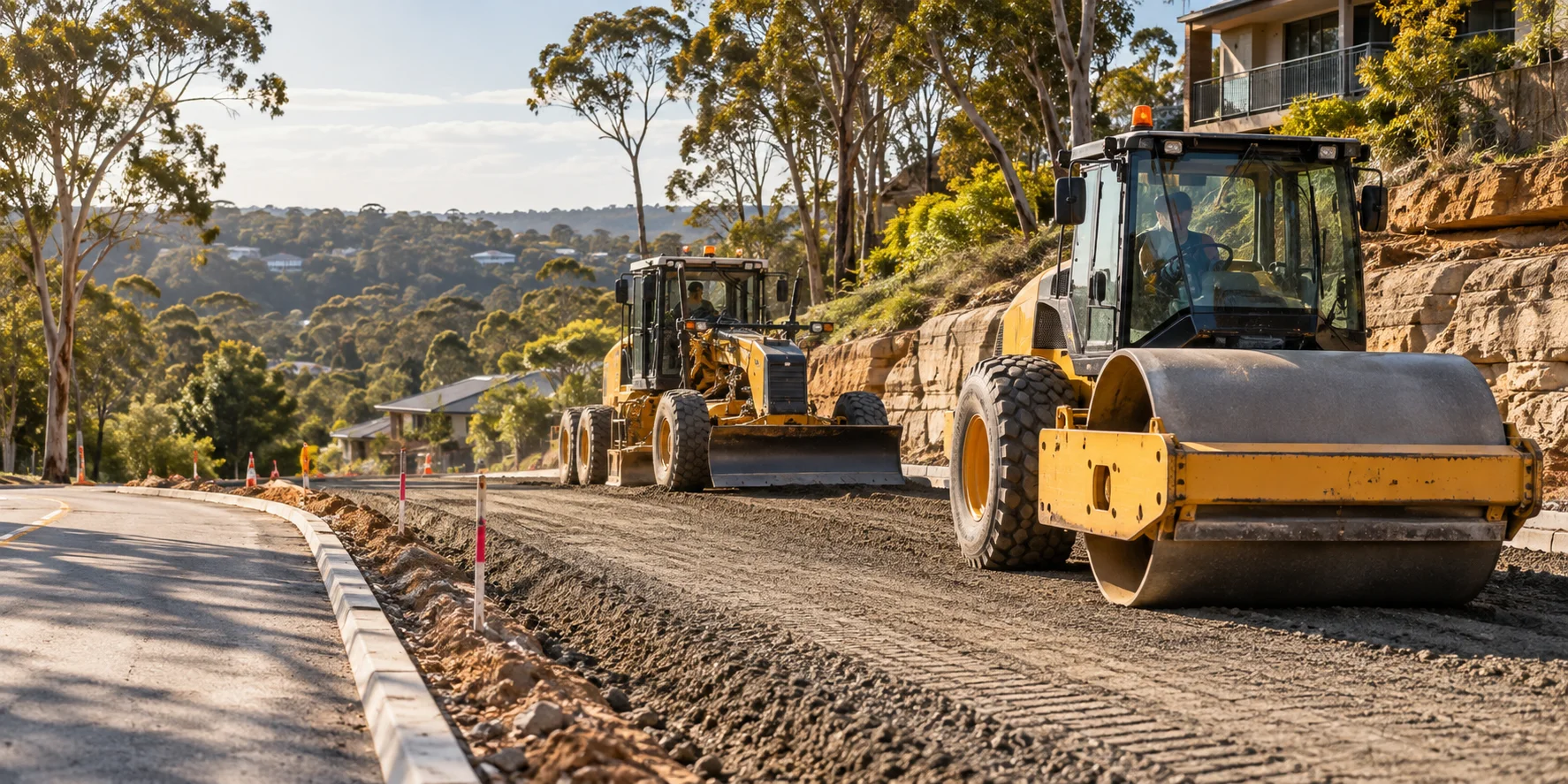
AI-generated illustration for Sutherland Shire Road Base Preparation, inspired by Sutherland Shire, NSW
CIVIL & UTILITY WORKS

Sutherland Shire Road Base Preparation

Prepare a sound pavement foundation with the material, layer depth and compaction requirements defined.

SUTHERLAND SHIRE, NSWRESIDENTIAL   /   COMMERCIALAI-generated site illustration
YOUR SITE. THE RIGHT APPROACH.

Road Base Preparation in Sutherland Shire

A durable surface starts with a well-compacted base, and Sutherland Shire Road Base Preparation provides the strength that driveways, yards and access roads rely on. We excavate, spread and compact quality road base to correct levels.

Tell us the area size, expected loads and finished surface. The right depth, material and compaction prevent settling and cracking, protecting your investment in concrete, asphalt or pavers.

From Taren Point and Kirrawee to Miranda, Caringbah and Cronulla, residential and commercial sites both rely on solid bases. Reliable crews, correct equipment and careful grading give you a surface that performs for years.

Explore the scope ↓
01 Site review
and access
02 Clear written
scope
03 Defined site
handover
LET'S TALK ABOUT YOUR SITE

Get A Free Estimate

Tell us about the job. Save your project details, then call us to discuss a quote.

Your brief downloads to your device. No enquiry is sent. Call 00 0000 0000 to discuss your project. Privacy information.

Road Base Preparation Services in Sutherland

01

Excavation to Correct Depth

We excavate to the required depth for your driveway, yard or access road, removing unsuitable material such as soft clay, tree roots and organic topsoil, and then creating a stable starting point for road base placement, saving you time later.

02

Quality Road Base Placement

Suitable road base is spread evenly to the correct thickness, placed in separate layers where a greater depth is needed, providing a strong, load-bearing layer that supports concrete, asphalt or pavers for years of reliable use, saving you future repairs.

03

Thorough Compaction and Grading

The base is compacted and graded with proper falls, using vibrating rollers or plate compactors to suit the area, preventing settling, cracking and pooling so your finished surface remains durable, safe and good-looking over time, protecting your investment long term.

BUILD IT FROM THE BOTTOM

Road Base Preparation Experts in Sutherland Shire: How We Do The Job

  1. Excavate to subgrade level

    Dig down by the pavement depth the design requires, allowing for the road base plus the final surface. Set out by levels, not by guess. Topsoil and organic material are stripped first, because they compress and rot under a pavement.

  2. Check and proof-roll the subgrade

    Rolling the exposed ground shows soft spots. Weak patches should be removed and replaced, because the pavement is only as good as what is underneath it. Ground that pumps or moves under the roller signals wet clay or old fill.

  3. Add geotextile if needed

    On soft or clay ground, a geotextile layer can stop the base material mixing into the subgrade. Ask whether the design calls for it. It is laid flat with overlapped joins, and kept clean until the first layer covers it.

  4. Place crushed rock base

    A graded crushed rock such as 20 mm road base is delivered and spread. Moisture matters, because it needs to be damp enough to compact. Spreading evenly avoids segregation, where coarse stones separate from fines and leave weak, loose patches.

  5. Compact in thin layers

    Each layer is compacted before the next goes on. Skipping this to save time is what leads to ruts and potholes. A roller or plate compactor suited to the area is used, with water added when the material dries out.

  6. Trim to crossfall

    The surface is shaped to the designed falls so water runs off instead of ponding on the pavement. Edges are finished to meet kerbs, garage slabs and lawns at the right height, and levels are checked before sealing or paving.

WHERE IT IS USED

Jobs that start with road base

Driveways

Under concrete, pavers or asphalt. A heavier truck than a car will need a stronger design than a standard family driveway. Tell the contractor about caravans, boats, delivery trucks or bins, because the occasional heavy vehicle decides the base depth.

Hardstands and yards

Areas for parking trailers, boats or machinery. Point loads from trucks and equipment can punch through thin bases. Jockey wheels, outrigger pads and steel tracks concentrate weight on small areas, so ask for a design that suits the heaviest item.

Access tracks

Rural and bushland tracks that need to hold up in wet weather without becoming a bog. Crossfall, table drains and diversion humps shed water before it soaks in. In bushfire-prone areas, RFS conditions may also set width and surface requirements.

Temporary site access

A stabilised pad at the entry to a construction site keeps mud off the street and is part of erosion control. Coarse rock over geotextile shakes mud from tyres, and needs topping up as it clogs during a long build.

BASE FAILURES TO AVOID

Common Road Base Preparation Mistakes in Sutherland Shire: How To Handle Them

01

Building on soft subgrade

Laying base over soft clay or old fill without removing or stabilising it will lead to settlement. Test it first. Former demolition sites can hide old footings, rubble pits and backfilled pools, all of which settle differently from natural ground.

02

Too thin to save money

A thin base looks fine for a year and then ruts. Match the depth to the heaviest vehicle that will actually use it. Visiting concrete trucks, removalists and skip-bin lorries count too, so allow for them in the pavement design.

03

Poor compaction

One thick layer rolled once is not compacted. Thin layers, adequate moisture and enough passes make the difference. On larger or engineered jobs, density testing confirms the result, so ask whether it is required before the surface goes on top.

04

No drainage plan

Water trapped in the base weakens it from within. The surface needs fall and the edges need somewhere for water to go. Low points may need a pit or grated channel drain, with runoff directed to the approved discharge point.

05

Using dirty or recycled material blindly

Clean crushed concrete can be a good base, but ask for its source and grading so the base behaves as designed. Material from an unknown source can contain brick, timber, plastic or asbestos fragments, which weaken pavements and complicate disposal.

06

Unsupported edges

Base left with loose, unrestrained edges crumbles and spreads under wheels, and the surface on top breaks away with it. Plan kerbs, edging or a wider shoulder where tyres run close, and compact the edges as firmly as the middle.

PAVEMENT TERMS

Road Base Preparation Terms That You Need To Know

Subgrade
The natural or filled ground the pavement sits on. Its strength decides how thick the base must be. Soft, wet or uneven subgrade is usually improved by removal, replacement, drying or stabilisation before any road base is placed over it.
CBR
California Bearing Ratio, a measure of how strong the subgrade is. It compares the soil's resistance to penetration with a standard crushed rock. A low CBR means a weaker subgrade, so the designer specifies a thicker base or ground improvement.
Proof-rolling
Driving a heavy roller or truck over the subgrade to find soft spots. Areas that deflect, rut or pump under the wheels are marked and fixed before base goes on. It is a check that catches what visual inspection misses.
Crossfall
The sideways slope of the surface that sheds water. It is usually expressed as a percentage or ratio, and directs water to a kerb, edge or drain rather than letting it pond in wheel paths, where it softens the base.
Geotextile
A fabric laid on soft ground to separate and stabilise layers. It stops fine soil pumping into the base and keeps the rock from pushing down into mud. Different grades suit separation, filtration or reinforcement, so the designer specifies which.
DGB
Dense graded base, a crushed rock blend with sizes from coarse stone down to fines. The mix packs tightly when compacted at the right moisture. It is often ordered by its maximum stone size, such as DGB20, so confirm the product name with the supplier.
WHY CHOOSE US FOR ROAD BASE PREPARATION

Why Choose Our Road Base Preparation Experts

The strength of any driveway, yard or access road comes from the base beneath it, and our experts build that base properly. We excavate to the correct depth, remove unsuitable material and place quality road base evenly to the right thickness. Careful compaction and grading give your surface the falls and stability it needs to resist settling, cracking and pooling. Clear communication with your concreter or paver keeps your project running smoothly. With local knowledge of Sutherland Shire residential and commercial sites, we deliver a dependable, load-bearing foundation that protects your investment for many years. We work neatly and safely.

Talk to our team ↗
AI-generated illustration of road base preparation works in Sutherland Shire
BEFORE THE FIRST TIPPER ARRIVES

Road base preparation checklist

  • Pavement design or thickness confirmed
  • Heaviest expected vehicle identified
  • Finished levels and falls marked
  • Underground services located
  • Delivery access and tipping space clear
  • Compaction method agreed
  • Drainage outlet identified
  • Edge restraint or kerb details confirmed
ASKED ABOUT ROAD BASE PREPARATION

Frequently
Asked Questions

Traffic loading, subgrade conditions and pavement design.

Ask us about your project ↗
01How thick should the road base be?+

It depends on the traffic and the strength of the ground, so a design decides it. Tell the contractor what vehicles will use the surface, including any heavy trucks.

02Can I use recycled crushed concrete?+

Often yes. Clean crushed concrete is commonly used as base. Ask for the grading and source so you know what is going down.

03Is compaction testing needed?+

On a driveway it is not always required, but for engineered pavements, testing may be called for. Check the design or ask your certifier.

04Can I drive on it straight away?+

Light traffic is usually okay once compacted, but a heavy vehicle on an unsealed base can cause damage. Ask what is suitable for your situation.

CIVIL & UTILITY WORKS

Let’s start your road base preparation project.

Share the address, the access and the result you need.
Details first. Then a plan that suits the site.

Start a conversation ↗00 0000 0000