CONSIDERED DEMOLITION. EXCEPTIONAL POSSIBILITIES.LET’S TALK ABOUT YOUR SITE ↗ 00 0000 0000
Sutherland Shire Demolition
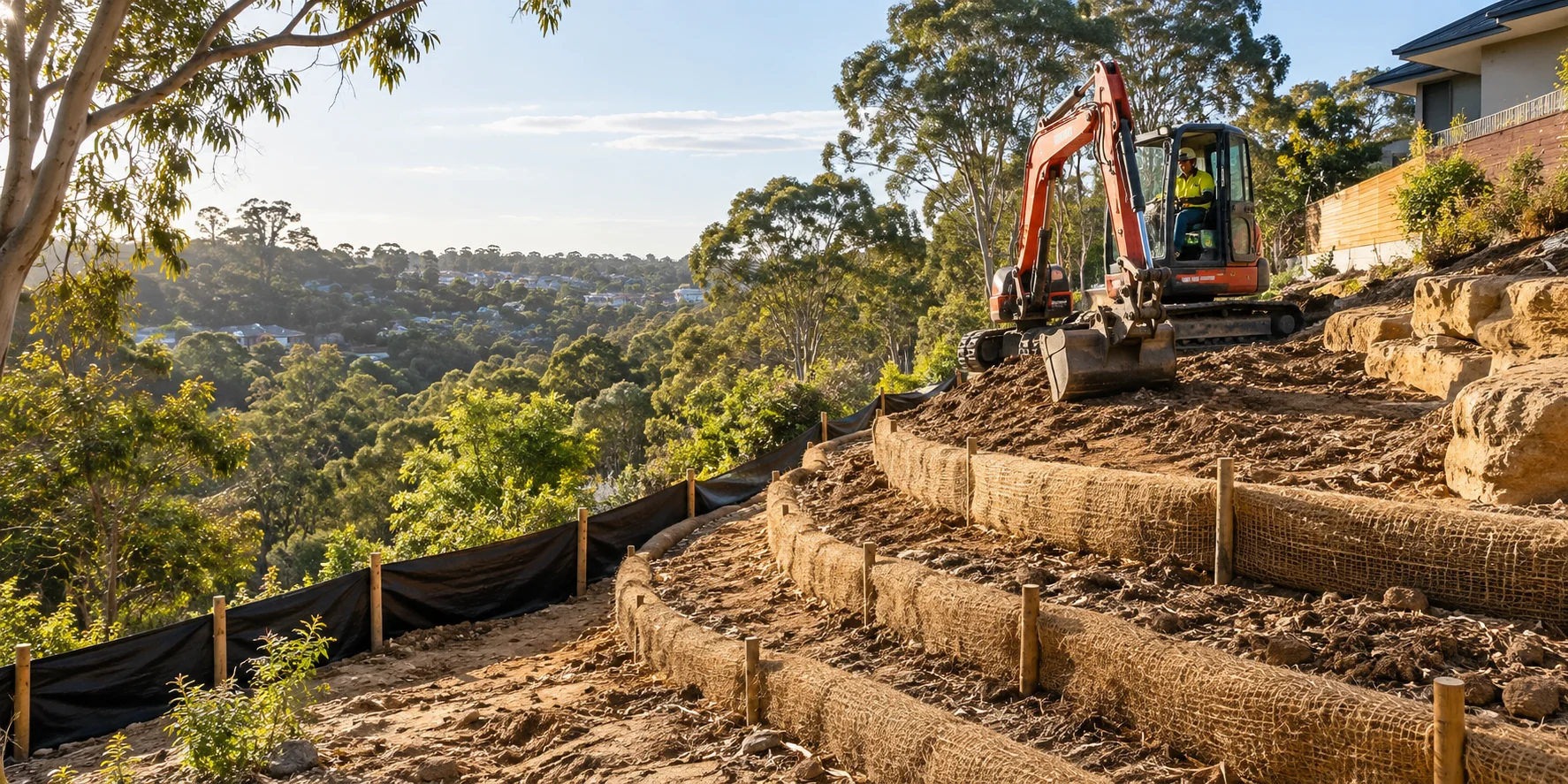
AI-generated illustration for Sutherland Shire Erosion Control, inspired by Sutherland Shire, NSW
EARTHWORKS & SITE MANAGEMENT

Sutherland Shire Erosion Control

Include sediment and surface-water measures in site preparation before exposed ground becomes a problem.

SUTHERLAND SHIRE, NSWRESIDENTIAL   /   COMMERCIALAI-generated site illustration
YOUR SITE. THE RIGHT APPROACH.

Erosion Control in Sutherland Shire

Rain can quickly wash soil from a site, and Sutherland Shire Erosion Control protects your property, neighbours and local waterways. We install sediment barriers, stabilise batters and manage runoff during and after works.

Tell us the site slope, soil type and project stage. Early measures such as silt fencing, stabilised entry points and covered stockpiles help meet council requirements and prevent costly clean-ups.

From Cronulla, Woolooware and Kurnell to Gymea Bay, Engadine and Menai, waterways and bushland sit close to many building sites. Practical controls keep soil where it belongs and your project compliant.

Explore the scope ↓
01 Site review
and access
02 Clear written
scope
03 Defined site
handover
LET'S TALK ABOUT YOUR SITE

Get A Free Estimate

Tell us about the job. Save your project details, then call us to discuss a quote.

Your brief downloads to your device. No enquiry is sent. Call 00 0000 0000 to discuss your project. Privacy information.

Erosion Control Services in Sutherland

01

Sediment Barriers and Silt Fencing

We install silt fencing and barriers that capture soil before it leaves your site, along with sediment controls and filter socks around stormwater pits, protecting neighbouring properties, stormwater drains and local waterways from sediment, saving you costly fines and cleanup.

02

Stabilised Entry and Stockpile Protection

Stabilised access points and covered stockpiles limit mud and dust, keeping soil and rock off the road, gutter and footpath, helping meet council requirements and preventing costly clean-ups after heavy rain, protecting neighbours, drains and your project from avoidable fines.

03

Batter and Slope Stabilisation

Exposed slopes are shaped and stabilised to resist washing away, using matting, mulch or rock protection to suit the site, protecting your build, neighbouring land and bushland from damage during and after construction, saving you cost and stress later on.

IT IS THE LAW

Sediment must stay on site

Under the Protection of the Environment Operations Act 1997, it is an offence to let sediment leave a site into the stormwater system. The NSW Blue Book is the standard reference for controls. Councils can issue penalty notices for breaches.

  • Controls go in before soil is disturbed
  • Your approval may list required measures
  • Check with Council or your certifier about specifics
SETTING UP CONTROLS

Erosion Control Experts in Sutherland Shire: How We Do The Job

  1. Mark the work zone

    Define the area to be disturbed and keep everything outside it intact. Use bunting or temporary fencing, keep machines and stockpiles inside the line, and leave existing grass and groundcover in place as long as possible because it filters runoff.

  2. Install sediment fencing

    Fabric fence is trenched in along the downslope edge, following the contour so water spreads rather than concentrates. Fabric is fixed to the upslope side of the posts, and the ends turn uphill so water cannot simply flow around them.

  3. Build a stabilised entry

    A shaker grid or aggregate pad knocks mud off tyres before they hit the street. Limit vehicles to this single exit, top up or clean the aggregate as it clogs, and sweep up any tracked soil from the road promptly.

  4. Protect inlets and downpipes

    Filter the nearest stormwater inlets and downpipes so silty water cannot get in. Kerb inlet filters, sandbags or geotextile socks are common options, but they must not cause flooding of the road, so check and clear them after every storm.

  5. Manage stockpiles

    Place stockpiles away from drainage lines, cover or bund them, and keep them within the controlled area. Never stockpile on the footpath or road without approval, and keep piles low and compact so they are easier to cover before rain.

SLOPE PROTECTION

Keeping bare ground in place

The longer a slope is bare, the more it can lose in one storm.

Diversion drains

Channels above the work divert clean water around the disturbed ground instead of through it. Keeping clean runoff separate reduces the volume needing treatment, and the outlet should discharge onto stable ground so it does not cause new erosion downslope.

Catch drains

Drains at the base capture runoff and send it to a sediment trap before discharge. The trap needs regular inspection and cleaning, because once it fills with silt it stops working and dirty water passes straight through to the stormwater.

Mulch, seed and jute mesh

Stabilise finished areas early with cover so they are not left bare while other work goes on. Mulch protects soil straight away, seed takes weeks to establish, and jute mesh holds both in place on steeper ground until roots develop.

Short slope lengths

Break long slopes with berms or contour banks so runoff cannot build up speed. Faster water carries more soil and cuts rills and gullies, so shorter runs, rough surfaces and early cover all reduce the damage from heavy summer storms.

WHY CONTROLS FAIL

Common Erosion Control Mistakes in Sutherland Shire: How To Handle Them

01

Fabric not trenched in

Water flows under a fence that is only laid on the surface. The base must be buried and compacted. A narrow, shallow trench on the upslope side, with fabric folded into it and backfilled firmly, stops water undermining the fence.

02

Fence running down the slope

A fence that follows the fall becomes a channel. Run it along the contour. Where the ground forces a change in direction, add short returns turning uphill so water ponds behind the fabric and silt settles out instead of escaping.

03

Installed late

A fence put up after the first storm is a clean-up job, not a control. Sediment already in the gutter or drain must be removed, and the site may face complaints or penalties, so install controls before soil is disturbed.

04

Never inspected

Controls clog and fall over. Check them after rain and repair them promptly. Remove silt before it builds up high against the fabric, replace torn sections, and keep a simple log of inspections and repairs for the certifier or Council.

WHY CHOOSE US FOR EROSION CONTROL

Why Choose Our Erosion Control Experts

Rain can wash soil off a site in hours, causing damage, fines and neighbour complaints. Our erosion control experts install silt fencing, sediment barriers, stabilised entry points and covered stockpiles before problems begin. Exposed slopes are shaped and stabilised so they resist washing away during and after construction. We inspect controls after heavy rain. Clear communication helps you understand council requirements and what is needed at each project stage. With local knowledge of Sutherland Shire waterways, bushland and sloping sites, we deliver practical controls that keep soil where it belongs, protect neighbours and local creeks, and keep your project compliant.

Talk to our team ↗
AI-generated illustration of erosion control works in Sutherland Shire
RAIN ON THE WAY

Pre-storm checklist

  • Sediment fences intact and silt cleared
  • Stockpiles covered or bunded
  • Entry pad clear and drains protected
  • Open trenches covered or backfilled
  • Bare areas covered with mulch or mesh
  • Contact details for the site supervisor accessible
  • Diversion drains and outlets checked for blockages
  • Loose materials and bins secured
AFTER EROSION CONTROL

Other Related Services

Site work is a sequence. These are the services most often discussed alongside or straight after this one.

All services ↗
ASKED ABOUT EROSION CONTROL

Frequently
Asked Questions

Site slopes, runoff paths and the erosion-control plan.

Ask us about your project ↗
01Do I need erosion control on a small job?+

Usually yes if soil is disturbed and could reach the street or a drain. Your approval or Council can confirm what applies.

02Who is responsible if sediment gets onto the road?+

The person in charge of the site can be held responsible, so it is worth confirming who manages controls on your job.

03How long do controls stay in?+

Until the ground is stabilised, for instance by turf, paving or established cover. Removing them too early undoes the work.

EARTHWORKS & SITE MANAGEMENT

Let’s start your erosion control project.

Share the address, the access and the result you need.
Details first. Then a plan that suits the site.

Start a conversation ↗00 0000 0000