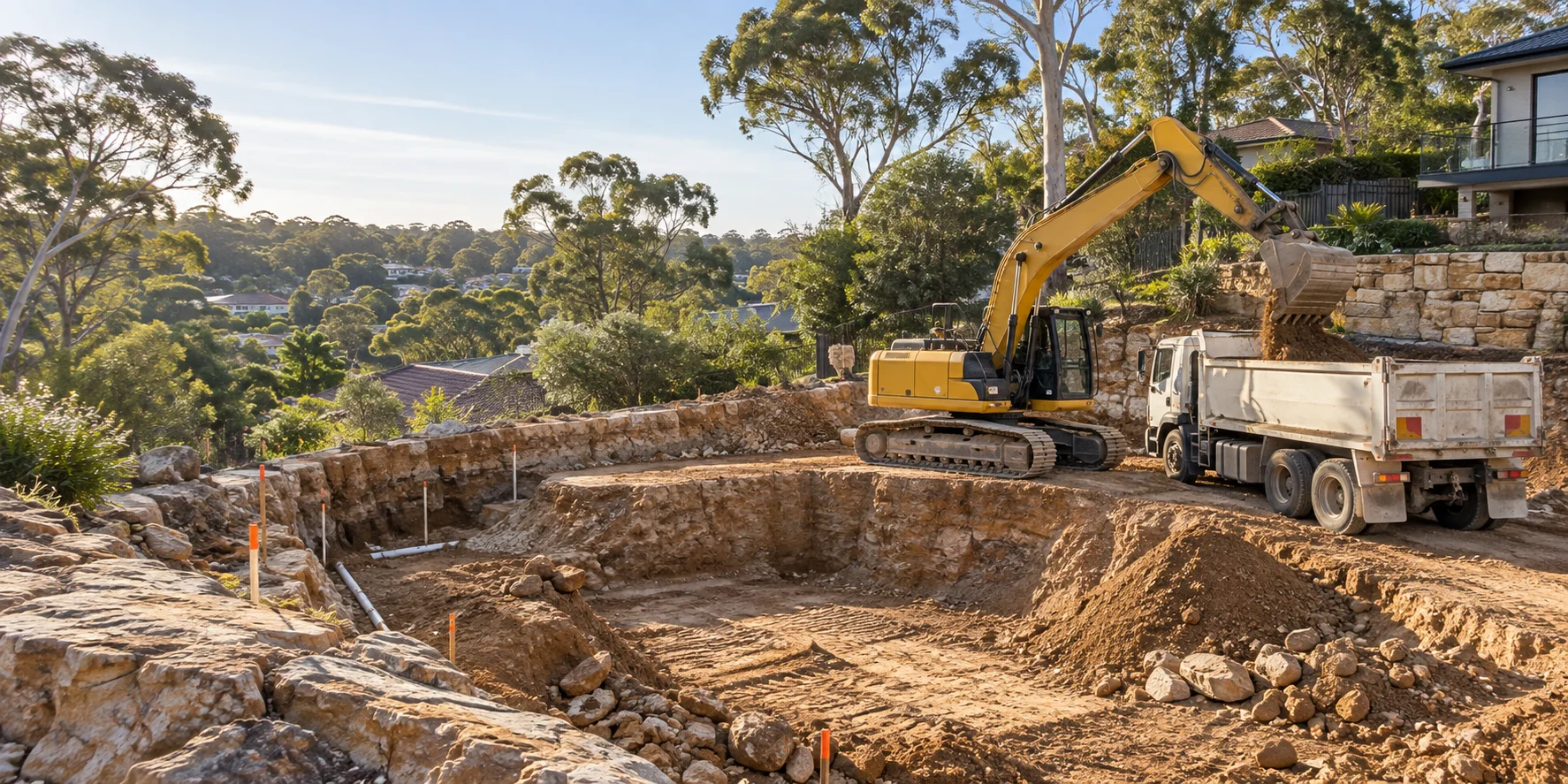
- Spoil
- The soil and rock removed from the hole, whether it is stockpiled or carted away. How much spoil a job creates, and where it ends up, often has a bigger effect on cost and the program than the digging itself.
- Benchmark
- A fixed reference level that all depths are measured from, usually set by the surveyor or builder. It should sit somewhere the machine will not disturb, such as a kerb, peg or wall, and be rechecked if anything nearby moves.
- Battering
- Sloping the sides of an excavation back so they stand up without shoring. The safe angle depends on the soil type, depth and groundwater, and the extra width needed can make it impractical close to boundaries, footings or existing buildings.
- Subgrade
- The natural or prepared ground surface under a slab, footing or pavement. It should be firm, even and free of loose material, because a soft subgrade can lead to cracking and settlement later. Compaction should be checked before pouring begins.
- VENM
- Virgin excavated natural material, clean soil that meets a waste classification and is easier to place off site. It must not contain fill, rubbish or any contamination, so mixed soil from old building or demolition sites often does not qualify.
- Shoring
- Temporary support, such as trench boxes, sheets or props, that holds excavation walls in place where battering is not practical. It should suit the soil type and depth, be installed as the dig progresses, and be in place before anyone enters a deep trench.