- Substrate
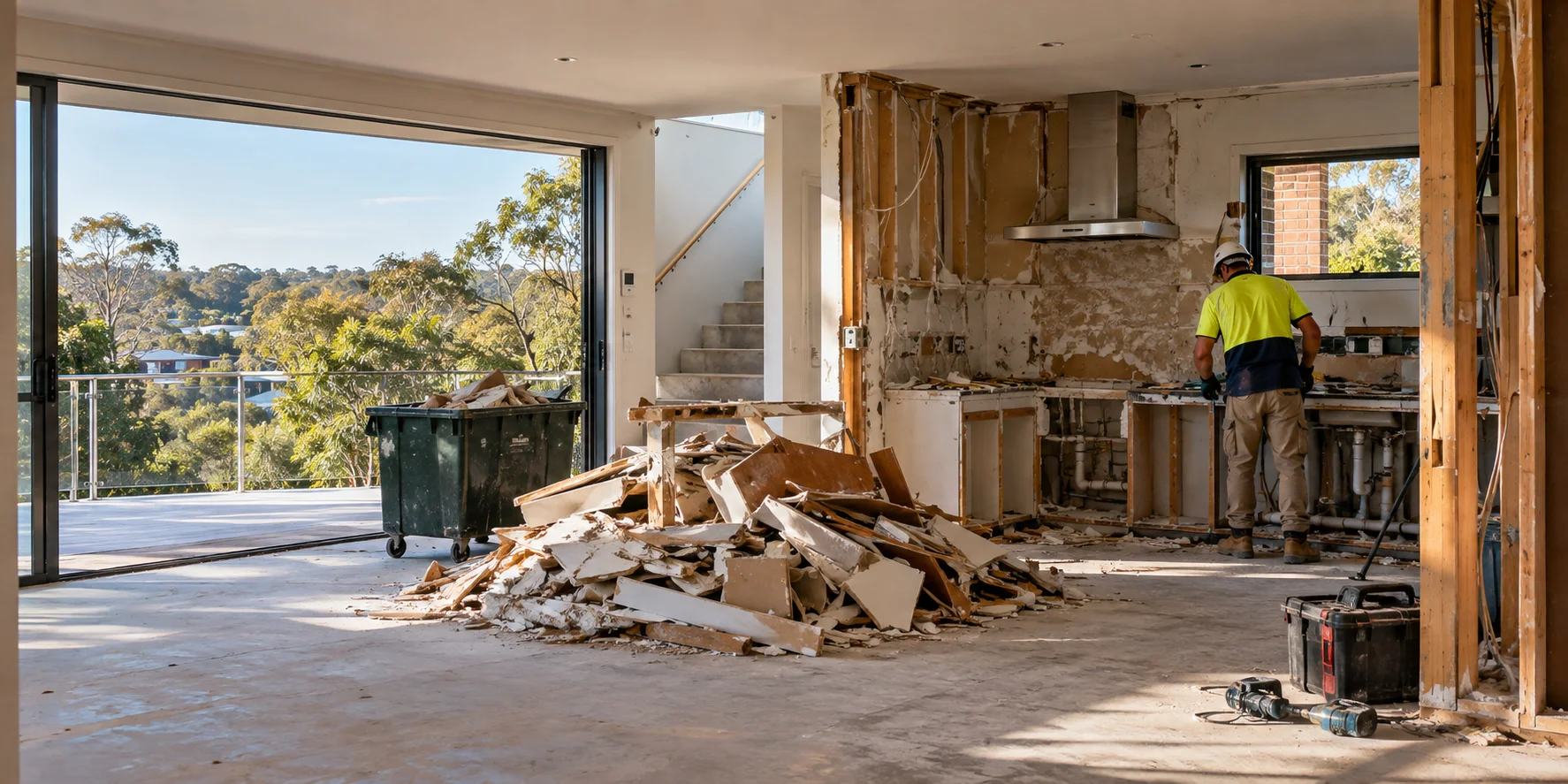
- The bare surface left after finishes are removed, such as concrete, framing or sheet. Its condition decides what comes next, so the builder checks it for rot, cracking, moisture or uneven levels before new linings, waterproofing or flooring go down.
- Isolation
- Disconnecting and proving a service dead or shut off before work. Electricians test circuits after switching off and lock or tag the board, while plumbers close and tag valves, so nobody restores power, gas or water while the strip continues.
- Make safe
- Capping and securing exposed pipes and wires after removal. Live cables are terminated by an electrician, pipes are capped by a plumber, and the work is labelled so later trades know which services remain active and which are permanently disconnected.
- Partition
- A non-loadbearing interior wall, as confirmed by an engineer or builder. In offices it is usually a stud frame with plasterboard, while in homes a similar-looking wall may support ceiling joists or roof framing, so never assume without checking first.
- Loading dock
- A designated area for loading waste or deliveries. In shopping centres and office buildings it is often shared and usually booked through building management, with set time slots, vehicle height limits and rules about how long trucks may stand idle.
- Base building
- The structure, core services and common finishes the landlord provides, as distinct from the tenant's fit-out. A strip-out usually returns a tenancy to base building condition or the standard set in the lease, so check which ceilings, lights and sprinklers must stay.