CONSIDERED DEMOLITION. EXCEPTIONAL POSSIBILITIES.LET’S TALK ABOUT YOUR SITE ↗ 00 0000 0000
Sutherland Shire Demolition
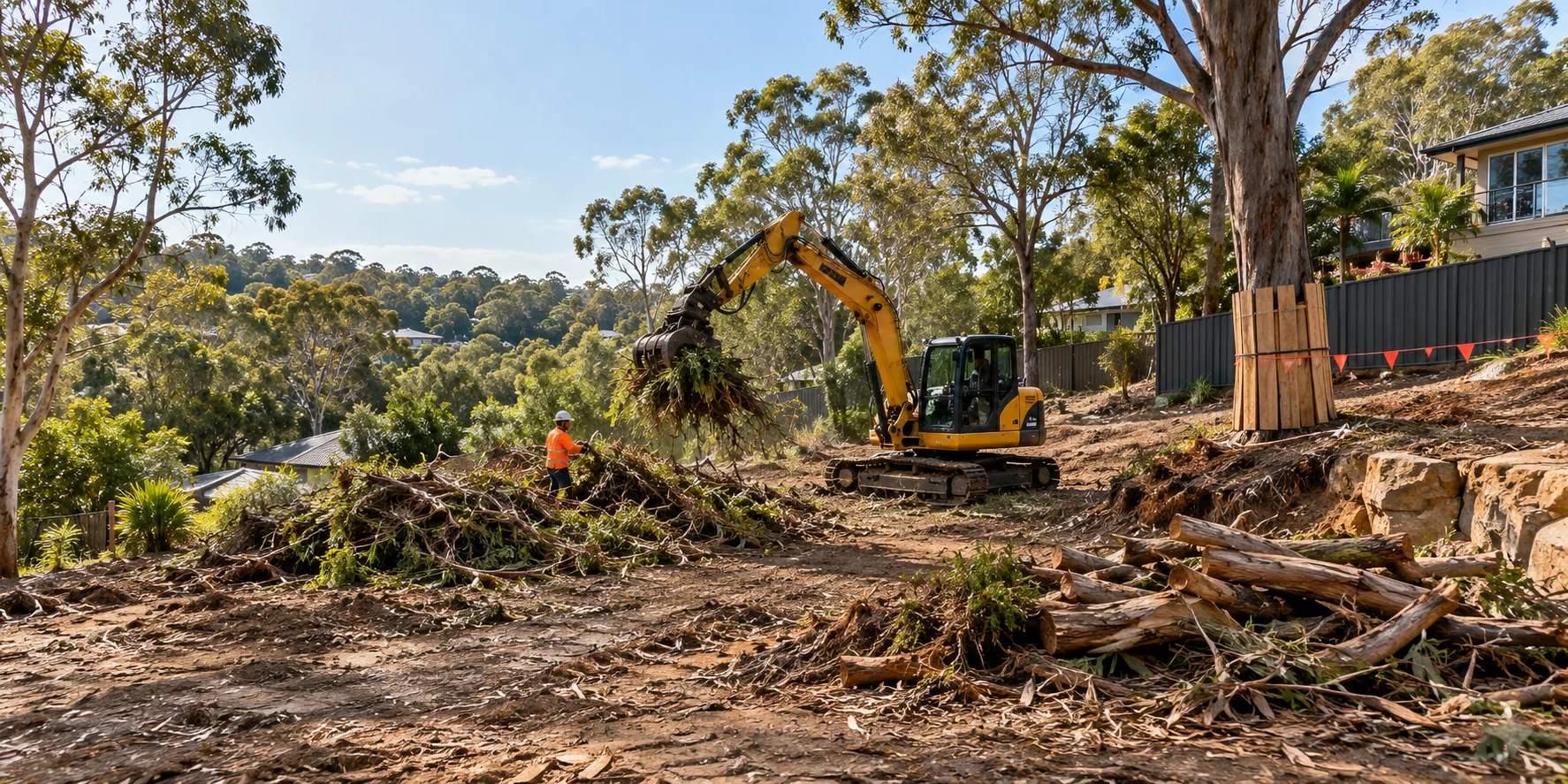
AI-generated illustration for Sutherland Shire Land Clearing, inspired by Sutherland Shire, NSW
SITE PREPARATION & GROUNDWORK

Sutherland Shire Land Clearing

Open up a development footprint by removing agreed vegetation and surface obstructions.

SUTHERLAND SHIRE, NSWRESIDENTIAL   /   COMMERCIALAI-generated site illustration
YOUR SITE. THE RIGHT APPROACH.

Land Clearing in Sutherland Shire

Overgrown blocks hide levels, boundaries and hazards, and Sutherland Shire Land Clearing brings the site back into view. We remove scrub, stumps, debris and unwanted growth in a way that suits your plans and approvals.

Let us know the block size, vegetation type and what you intend to do with the land. Clear direction on protected trees, boundaries and disposal means the work stays compliant and the finished ground suits your next stage.

Across Engadine, Heathcote, Menai and Bundeena, many properties border bushland. We manage fire risk, runoff and access carefully, leaving a clean, usable block ready for building, fencing or landscaping.

Explore the scope ↓
01 Site review
and access
02 Clear written
scope
03 Defined site
handover
LET'S TALK ABOUT YOUR SITE

Get A Free Estimate

Tell us about the job. Save your project details, then call us to discuss a quote.

Your brief downloads to your device. No enquiry is sent. Call 00 0000 0000 to discuss your project. Privacy information.

Land Clearing Services in Sutherland

01

Scrub, Stump and Debris Removal

We clear overgrown scrub, stumps and rubbish from your block, revealing true levels and boundaries so you can plan fencing, building or landscaping with complete confidence, saving you significant effort. Hidden hazards such as old septic pits are also exposed.

02

Approval and Boundary Awareness

Protected trees and boundaries are identified before clearing starts, with council tree and vegetation rules checked for your block, helping keep the work compliant and avoiding disputes with neighbours or issues with council requirements later, saving you stress and money.

03

Bushfire and Runoff Management

We manage cleared material and exposed ground carefully, mulching on site or removing green waste, as you prefer, reducing fuel loads and controlling runoff, so your entire block is much safer and more stable after all the work is complete.

APPROVALS COME FIRST

Check before a single tree comes down

Council approval or a permit is generally required to remove or prune prescribed trees, and the Biodiversity and Conservation SEPP can also apply. Clearing without the right approval can be costly to rectify, so confirm the position in writing first.

  • Ask Council or your certifier whether trees on your block are protected under local vegetation controls.
  • An arborist report is often the quickest way to show what is exempt and what needs a permit.
  • Bushfire prone land has some different rules, so mention it if your block is on a bushland edge.
HABITAT AND WILDLIFE

Things Our Sutherland Shire Land Clearing Company Considers

Hollow-bearing trees

Old trees with hollows can shelter birds, bats and possums. Ask an ecologist or arborist to look before felling and ask about threatened species rules. Hollows take many decades to form, so they are often treated as significant habitat features.

Check before you cut

A walk-through before clearing begins helps find nests, burrows and animals in the debris. Keep a local wildlife carer’s number handy for injured animals, and make sure the crew knows to pause work whenever an animal is found or disturbed.

Bushland edges

Blocks near Royal National Park, Heathcote or Woronora River gullies are more likely to carry native vegetation, which brings tighter controls. These edges are also often bushfire prone, so clearing, asset protection zones and approvals need to be considered together.

Timing

Breeding seasons can influence when clearing is sensible. Your ecologist can advise rather than leaving it to chance. Building timeframes, approval conditions and weather also matter, so raise timing early instead of discovering a constraint after the machines are booked.

STUMPS AND ROOTS

Stump grinding or full removal

Grind the stump

  • Fast and low disturbance to surrounding ground
  • Leaves roots in place to rot, which can settle over time
  • Suits garden areas and trees near retained roots
  • Not ideal under a slab or footing

Dig it out

  • Removes the root ball and main roots
  • Needed where a slab, footing or pool will go
  • Leaves a large void to backfill and compact
  • Can damage roots of neighbouring or retained trees

Under a building footprint, remove the stump and roots. Elsewhere, grinding is usually enough.

HOW A CLEARING JOB RUNS

Land Clearing Experts in Sutherland Shire: How We Do The Job

  1. Mark what stays

    Retained trees are tagged and fenced, with a tree protection zone to AS 4970 where applicable. Walk the markings with the contractor before work starts, and keep machines, stockpiles and parked vehicles outside the fenced zones for the whole job.

  2. Ecology and weeds walk

    Note habitat features and declared weeds so waste can be handled correctly. A short site walk with an ecologist or experienced operator flags hollow trees, nests and invasive plants before they are mixed into the general pile of cleared material.

  3. Locate services and wires

    Lodge Dial Before You Dig and note overhead power lines near any tree to be felled. Work close to overhead wires has safety exclusion zones, and an arborist or network operator may need to be involved before branches near them are cut.

  4. Install sediment controls

    Sediment fencing and a stabilised entry go in before ground is opened, especially on sloping blocks above gullies and creeks. Removing roots and groundcover leaves soil loose, and the first storm can carry it into stormwater drains or bushland below.

  5. Fell and process

    Trees are felled in a controlled way away from fences, wires and neighbours, then cut into manageable pieces. Where space is tight, they are taken down in sections instead, with exclusion zones below the work kept clear of people throughout.

  6. Separate the waste

    Mulch and clean timber can be reused or recycled. Weedy material and soil go elsewhere. Keeping these streams apart on site avoids contaminating good mulch, lowers disposal costs and makes it easier for receiving facilities to accept each separate load.

  7. Cart away or retain

    Cleared material leaves in loads to a facility that can lawfully accept it, or is mulched on site if the design allows. Keep disposal dockets, and plan truck access so loading does not block the street or damage the verge.

  8. Stabilise bare ground

    Cover cleared areas with mulch, jute mesh or groundcover soon after clearing if building will not start straight away. Bare soil erodes and grows weeds quickly, and spreading weed-free mulch from the job can reduce both problems at little extra cost.

WHY CHOOSE US FOR LAND CLEARING

Why Choose Our Land Clearing Experts

Overgrown blocks can hide hazards, boundaries and levels, so you need experts who clear land carefully and correctly. Our land clearing team removes scrub, stumps and debris while respecting protected trees, boundaries and approval requirements. We plan around fire risk, runoff and access, using suitable machinery for your block size and terrain. Clear communication means you know what is being removed, what stays and what the finished ground will look like. With experience across Sutherland Shire properties bordering bushland, we deliver a clean, usable block efficiently, leaving the land ready for building, fencing, landscaping or whatever you have planned next.

Talk to our team ↗
AI-generated illustration of land clearing works in Sutherland Shire
CLEARING MISTAKES

Common Land Clearing Mistakes in Sutherland Shire: How To Handle Them

01

Trenching through root zones

Cutting roots of a retained tree can kill it or make it unstable. Keep trenches and machine traffic outside the protection zone. Damage may not show for months, and Council can treat it as unapproved harm to a protected tree.

02

Burning off

Burn-offs are generally not permitted in urban areas. Plan on cartage or mulching. Smoke affects neighbours and can trigger complaints or fire service attendance, so build disposal into the quote rather than assuming material can simply be burnt on site.

03

Clearing more than approved

A machine can remove a lot quickly. Agree boundaries on the ground, not just on the plan. Mark limits with flagging or fencing, brief each new operator, and check them again if crews or machines change partway through the job.

04

Weeds spread by the load

Moving weedy mulch or soil spreads weeds to the next site. Ask how weed waste will be handled, whether machines are washed down between jobs, and where infested material is taken, especially on blocks near bushland reserves, creeks and gullies.

ASKED ABOUT LAND CLEARING

Frequently
Asked Questions

Tree retention, boundaries and any site-specific approval requirements.

Ask us about your project ↗
01Do I need approval to clear my own block?+

Often yes for prescribed trees and native vegetation, though some trees are exempt. Check with Council or your certifier before work begins.

02Can cleared vegetation be mulched on site?+

Often, if the design and weeds allow. Mulch can be reused for garden beds or stabilising slopes. Ask the contractor what will be mulched and what will leave.

03What if we find wildlife during clearing?+

Work should stop and a wildlife carer should be contacted. Ask your contractor what their process is.

04Is clearing different from vegetation removal?+

Clearing opens a whole footprint for construction. Vegetation removal is usually targeted removal of unwanted growth in an existing garden.

SITE PREPARATION & GROUNDWORK

Let’s start your land clearing project.

Share the address, the access and the result you need.
Details first. Then a plan that suits the site.

Start a conversation ↗00 0000 0000