CONSIDERED DEMOLITION. EXCEPTIONAL POSSIBILITIES.LET’S TALK ABOUT YOUR SITE ↗ 00 0000 0000
Sutherland Shire Demolition
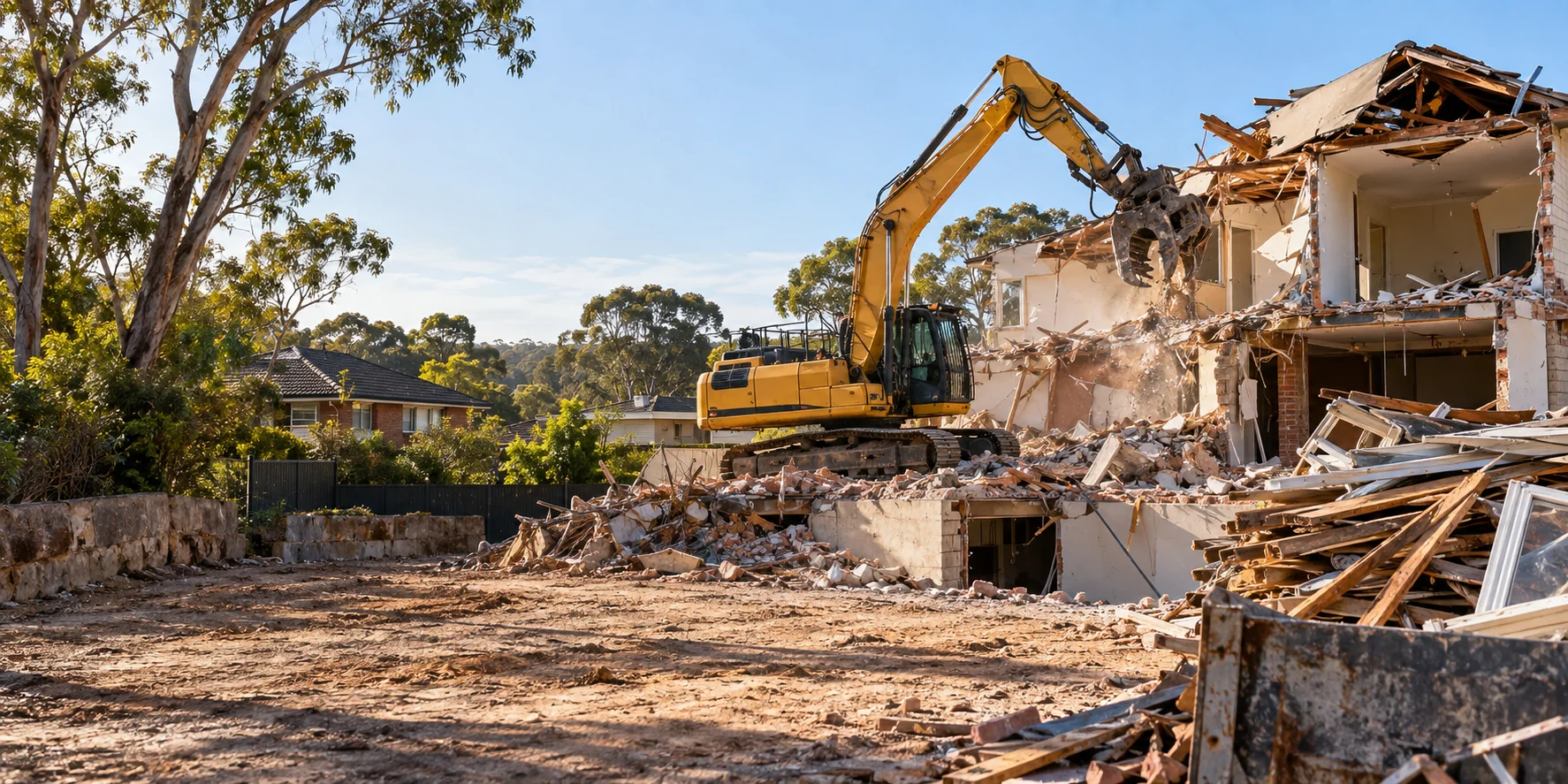
AI-generated illustration for Sutherland Shire House Demolition, inspired by Sutherland Shire, NSW
DEMOLITION & REMOVAL

Sutherland Shire House Demolition

Make room for your next chapter with a carefully scoped house knockdown, material separation and a clear site handover.

SUTHERLAND SHIRE, NSWRESIDENTIAL   /   COMMERCIALAI-generated site illustration
YOUR SITE. THE RIGHT APPROACH.

House Demolition in Sutherland Shire

Make room for your next chapter with Sutherland Shire House Demolition that is carefully scoped, safely managed and finished to a clean handover. Every job begins with a site inspection, so asbestos, services and access are understood before any machine arrives on your property.

Start your enquiry with the property address, your plans and the result you need. Whether it is a full knockdown ahead of a new build or a staged removal, a well-planned scope connects the work on site with the next stage of your project.

From Caringbah and Miranda to Gymea, Kirrawee and Cronulla, site access, neighbouring homes and council requirements all shape the approach. Local knowledge keeps the job moving and delivers a site that is ready for what comes next.

Explore the scope ↓
01 Site review
and access
02 Clear written
scope
03 Defined site
handover
LET'S TALK ABOUT YOUR SITE

Get A Free Estimate

Tell us about the job. Save your project details, then call us to discuss a quote.

Your brief downloads to your device. No enquiry is sent. Call 00 0000 0000 to discuss your project. Privacy information.

House Demolition Services in Sutherland

01

Pre-Demolition Site Inspection

We inspect the structure, services, access and boundaries before work begins, identifying hazards early so the demolition is planned safely and your project avoids costly surprises later in the build. Nearby trees, neighbouring walls and suspected asbestos are all noted.

02

Material Separation and Disposal

Timber, brick, metal and concrete are separated on site, then removed and disposed of responsibly, with recyclable materials sent to local recycling facilities wherever possible, reducing landfill and keeping your property tidy while the demolition progresses, saving you extra effort.

03

Clean Site Handover

Once the structure is down, we clear debris, remove remaining slabs, footings and driveways as agreed with you, level the ground and leave the block ready for your builder, surveyor or landscaper to begin the next stage, without any fuss.

FROM APPROVAL TO EMPTY BLOCK

House Demolition Experts in Sutherland Shire: How We Do The Job

  1. Approval confirmed

    Demolition generally needs a DA or a CDC through Council or a private certifier. Ask for the approval and its conditions before a date is booked, because hours, dust and waste conditions flow from it. Give the contractor a copy.

  2. Hazardous materials survey

    An asbestos assessment of the whole house, including eaves, wall sheeting, vinyl floors and the roof, comes before any machine arrives. Any asbestos found is removed first by an appropriately licensed removalist, and a clearance is issued before demolition proceeds.

  3. Services disconnected

    Power, gas, water and sewer connections are isolated or capped by the relevant authority or licensed trade. Nothing should be live when the machine starts pulling the house apart, so book disconnections well in advance and keep the written confirmations.

  4. Soft strip and sort

    Fittings, doors, windows, roof tiles or sheeting and timber are taken off by hand where practical, so metals, timber and masonry can go into separate streams. Cleaner streams are easier to recycle and cheaper to dispose of at the tip.

  5. Structure brought down

    The frame and masonry are demolished in a controlled sequence with dust suppression and fencing, keeping the debris within the site and away from neighbours. Walls near boundaries are usually pulled inwards so material falls safely back onto your block.

  6. Site handover

    Slabs, footings and debris are cleared as agreed, tip dockets are available, and the block is left safe and fenced for the next stage. Walk the site with the supervisor and check the finish against the quote before signing off.

BEFORE HOUSE DEMOLITION STARTS

Requirements for Demolishing a House In Sutherland Shire

DA or CDC

Which pathway applies depends on the site, heritage status and what is planned after. Your certifier or Council can tell you, so check before you book anything. Some owners lodge demolition with the new home application to keep one approval.

Heritage checks

Heritage items and conservation areas under the Sutherland Shire LEP 2015 add requirements. A tired old cottage can still be restricted. Check the planning certificate or ask Council, because a heritage listing can change the approval pathway and the timeline.

Dilapidation records

Photograph the neighbouring houses, fences and driveways before work starts. A written record protects both you and the neighbour if cracks are later claimed. Date photos, note existing cracks, and consider a formal report where walls sit near the boundary.

Telling neighbours

A short heads-up about dates, noise and truck movements avoids most complaints. Include a mobile number for the site supervisor. A letterbox note about a week ahead suits most streets, and mention any days when driveways may be briefly blocked.

Trees to keep

Retained trees need protection zones so machines and debris do not damage roots or trunks. Tell the contractor which trees stay. Your approval may list protected trees and fencing requirements, and removing trees without consent can bring penalties from Council.

Kerb and footpath

Trucks and machines crossing the kerb can damage the footpath, gutter and nature strip. Council may require a deposit or permit for the crossing and for skips on the road. Photograph the verge first, and confirm who arranges any road approvals.

ASBESTOS FIRST

How We Deal With Old Homes: Asbestos Handling in Sutherland Shire

Homes built before the mid-1980s, and some into the 1990s, may contain asbestos in fibro sheeting, eaves, roofing, fences, vinyl flooring and adhesives. Crushing it in a knockdown spreads fibres across the block and contaminates the whole demolition waste load.

  • Get a licensed asbestos assessor to inspect the house and report in writing.
  • Removal above 10 m² of bonded asbestos needs a Class B (or A) licensed removalist in NSW.
  • Keep the disposal documentation for the waste.
WHERE KNOCKDOWNS GO WRONG

Common House Demolition Mistakes in Sutherland Shire: How To Handle Them

01

Live services left connected

A forgotten gas or power connection is a serious hazard. Get written confirmation from the authority or trade that each service is disconnected. Abolishing a power supply or gas meter can take weeks to arrange, so request it well ahead.

02

Private pipes and tanks missed

Old septic tanks, stormwater lines and oil tanks are not on Dial Before You Dig plans. Mention anything you know about, and ask the contractor to look for the rest. Agree beforehand how unexpected finds will be handled and priced.

03

Mixed waste in one skip

Mixed demolition waste is generally more expensive to dispose of than separated concrete, brick, metal and timber. Sorting on site usually pays off. One contaminated load, such as concrete with plastic or asbestos fragments, can be rejected or charged more.

04

Slab and footings not in scope

Some quotes stop at floor level. Confirm whether slab, footings, driveway, paths and old garden structures are included. Ask as well about retaining walls, pool fencing and underground tanks, since leftovers become a second mobilisation and a separate bill later.

OWNER CHECKLIST

Have these ready for the quote

  • Approval documents (DA, CDC) or certifier contact
  • Asbestos assessment report, or a booking for one
  • Proof of service disconnections
  • Survey or boundary pegs located
  • Details of trees and structures to keep
  • Plans for the new build, if one is proposed
  • Site access: street width, parking, overhead lines
  • Neighbours told about start date and truck movements
WHY CHOOSE US FOR HOUSE DEMOLITION

Why Choose Our House Demolition Experts

Choosing the right team for a house demolition protects your budget, your neighbours and your timeline. Our experts begin with a detailed site inspection, so asbestos, services and access are understood before work starts. We communicate clearly, explain each stage and manage approvals, disconnections and waste so nothing is left to chance. Operators use the right machinery for your block, keeping dust, noise and vibration under control. Local knowledge of Sutherland Shire streets, soils and council expectations helps us avoid delays. When the job is finished, you receive a clean, level site that is ready for your builder to begin.

Talk to our team ↗
AI-generated illustration of house demolition works in Sutherland Shire
KNOCKDOWN LANGUAGE

House Demolition Terms That You Need To Know

DA / CDC
Development Application or Complying Development Certificate, the two main approval routes. A DA is assessed by Council, while a CDC is a faster code-based approval from Council or a private certifier where the site and project meet the set standards.
Soft strip
Removing non-structural items such as fittings, linings and roofing before the frame comes down. Done mostly by hand, it separates timber, metal and plasterboard so each can be recycled or disposed of correctly rather than crushed together in one load.
Dilapidation report
A recorded condition survey of neighbouring properties before work. It uses dated photographs and notes on existing cracks, fences and paving, so any later damage claim can be checked against how things looked before any demolition or excavation work started.
Tip docket
Receipt from the waste facility showing what was delivered and where. Dockets usually record the date, vehicle, material type and weight, and certifiers, builders or Council may later ask to see them as evidence that waste was disposed of lawfully.
Hardstand
A firm, level area for trucks and machines to work from. On a demolition site it is often the existing driveway or a compacted gravel pad that stops loaded vehicles sinking, rutting the ground or tracking mud onto the street.
Abolishment
The permanent removal of an electricity or gas supply to a property, as opposed to a temporary disconnection. It is arranged through your energy retailer or network, the meter and service line are taken away, and written confirmation is usually needed before demolition starts.
ASKED ABOUT HOUSE DEMOLITION

Frequently
Asked Questions

Existing building materials, boundary setbacks and the requirements of your new build.

Ask us about your project ↗
01Do I need approval to demolish my house?+

Generally yes. Most demolition needs a DA or CDC through Council or a private certifier, and heritage status can add requirements. Check with Council or your certifier before booking.

02Why does the asbestos survey come first?+

Because demolishing a house with asbestos in it contaminates the debris and the site. The survey tells you what must be removed by a licensed removalist before the main demolition begins.

03Who disconnects power, gas and water?+

The relevant authority or a licensed trade does it, usually arranged by you or your builder before demolition. Ask for written confirmation so the contractor knows the house is isolated.

04What condition is the site left in?+

That is agreed before work starts. Confirm in the quote whether slabs, footings, driveways and fencing are removed, and how the block is made safe.

DEMOLITION & REMOVAL

Let’s start your house demolition project.

Share the address, the access and the result you need.
Details first. Then a plan that suits the site.

Start a conversation ↗00 0000 0000