CONSIDERED DEMOLITION. EXCEPTIONAL POSSIBILITIES.LET’S TALK ABOUT YOUR SITE ↗ 00 0000 0000
Sutherland Shire Demolition
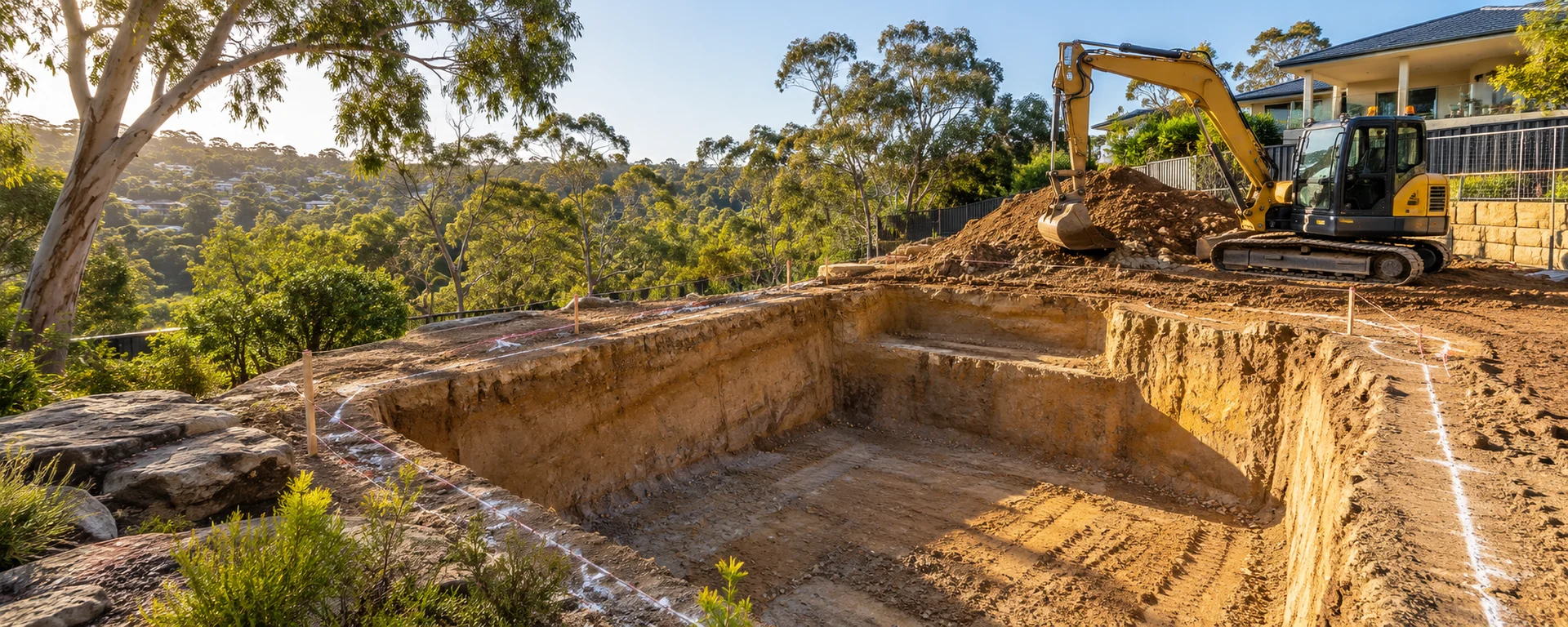
AI-generated illustration for Sutherland Shire Pool Digs, inspired by Sutherland Shire, NSW
EXCAVATION

Sutherland Shire Pool Digs

Prepare the excavation for a new pool with the installer’s dimensions and access needs clearly defined.

SUTHERLAND SHIRE, NSWRESIDENTIAL   /   COMMERCIALAI-generated site illustration
YOUR SITE. THE RIGHT APPROACH.

Pool Digs in Sutherland Shire

Your new pool begins with a precise excavation, and Sutherland Shire Pool Digs deliver accurate depth, shape and clean walls for your builder. We handle access, spoil removal and rock where it appears.

Send us your pool plans, backyard access details and any engineering. Planning machine access early avoids damage to fences, gardens and paving, and keeps the project on schedule from dig day to shell installation.

Across Caringbah, Woolooware, Sylvania, Cronulla and Miranda, sandstone and tight backyards are common. Our local experience, compact machinery and tidy site practices help you get your pool project off to a smooth start.

Explore the scope ↓
01 Site review
and access
02 Clear written
scope
03 Defined site
handover
LET'S TALK ABOUT YOUR SITE

Get A Free Estimate

Tell us about the job. Save your project details, then call us to discuss a quote.

Your brief downloads to your device. No enquiry is sent. Call 00 0000 0000 to discuss your project. Privacy information.

Pool Digs Services in Sutherland

01

Accurate Depth and Shape

We excavate to your pool plans with precise depth, dimensions and clean walls, including steps, ledges, spa areas and equipment pads where shown, giving your pool builder a correct starting point for shell installation, saving everyone time and reducing rework.

02

Rock and Access Management

Sandstone and tight backyards are common, so we plan machine access and rock removal carefully, using ground protection mats where machines track across the yard, protecting fences, paving and gardens while keeping your pool project on schedule throughout the dig.

03

Spoil Removal and Site Tidiness

Excavated material is loaded and removed efficiently, or kept on site for later backfill where you prefer, keeping your yard organised and safe so your pool builder can begin work without delays or obstructions, keeping your pool project moving forward.

POOL DIG PREP

What the pool installer must supply

A pool dig is only as accurate as the information behind it. Collect these before the excavation is booked.

  • Pool shell drawings with exact length, width and depth
  • Extra allowance for bedding and working room around the shell
  • Delivery date for the shell, so the hole is not left open long
  • Council or certifier approval and fence requirements
  • Location of the crane or truck that will lift the shell in
  • Where the spoil is going, and how much there is
  • Underground services checked within the dig area
  • Machine access and site protection planned
DIG DAY ORDER

Pool Digs Experts in Sutherland Shire: How We Do The Job

  1. Mark out the shape

    The pool outline is set out from the plan and checked against boundaries, house walls and any setbacks. Check the finished coping height against existing paving, decks and doors too, because it sets how deep the hole must actually go.

  2. Dig the main hole

    The excavator takes the bulk out, working toward the access point, while trucks or bins take the spoil away. Keep the spoil moving steadily, as a backyard quickly runs out of room once stockpiles start building up around the hole.

  3. Secure the walls

    Deep ends can pass 1.5 m, so before anyone climbs in to trim, the walls are battered, benched or supported to suit the soil. A ladder or ramp gives safe access in and out, and spoil is kept back from the edge.

  4. Trim to depth

    Walls and floor are trimmed to the shell dimensions with the bedding allowance included, then levels are checked. Deep and shallow ends, steps and ledges are measured against the installer drawings so the shell sits correctly without forcing or bridging.

  5. Prepare the base

    Depending on the shell type, a compacted sand or crushed rock bed is placed and levelled. The installer usually specifies the material and thickness, and any soft or wet spots in the floor should be dug out and replaced first.

  6. Trench for pipework

    Trenches are dug from the pool to the filter and pump position for suction and return lines, plus any power conduit. Agree the equipment pad location with the installer first, and keep the trenches clear of existing drains and footings.

  7. Reinstate the access

    Ground protection is lifted, the access path is swept and checked against photos taken before work, and any damage is noted. Gates, fences or garden edges removed for access are put back or made secure while the hole waits for the shell.

  8. Hold the hole open safely

    Fence off the hole and keep rain out where possible until the shell arrives. Divert surface water away from the edges, cover the base if storms are forecast, and check the walls for slumping before the shell is lowered in.

SHELL TYPE MATTERS

Fibreglass or concrete pool

Fibreglass shell

  • Excavation is shaped to suit a pre-made shell
  • Needs a flat compacted bed and tight access for the lift
  • Hole is open for a short period before installation
  • Working room around the shell is backfilled after placement

Concrete or shotcrete pool

  • Hole is dug over-size to allow for formwork and reinforcement
  • Walls can be cut more steeply, so soil strength matters
  • Spends longer open while steel and concrete are placed
  • Excavation is often followed by the pool builder own inspections

Ask the pool installer for the exact excavation sizes and bedding details. They differ between brands and shell types.

SITE LIMITS

What can stop a pool dig

Access width

Machines need a path from the street to the yard. A compact excavator with retractable tracks can fit through gates under about 1 m, but trucks and cranes need more. Measure the narrowest point, including steps, slopes and overhead eaves.

Sandstone

Rock in the pool footprint means rock breaking, extra time and noise. Rock found part-way through is a common cost variation. Ask how rock is priced before signing, and whether test holes can be dug first to check the depth.

Groundwater

In low or sandy areas, water can seep into the hole and slow the job. Ask whether pumping is included. Water under a shell can also cause problems later, so ask the installer about their drainage or hydrostatic valve requirements.

Nearby structures

Digging close to house footings or fences needs care, and a retaining wall may be required. Ask an engineer to check how close the pool can sit to footings, and whether the house slab or neighbouring walls need temporary support.

WHY CHOOSE US FOR POOL DIGS

Why Choose Our Pool Digs Experts

Your pool project starts with the dig, and accuracy at this stage saves time and money for everyone. Our pool dig experts excavate to your plans with precise depth, dimensions and clean walls, giving your pool builder the right starting point. We plan machine access carefully to protect fences, paving and gardens, manage rock where it appears and remove spoil efficiently. Clear communication keeps your project on schedule from dig to shell installation. With strong local knowledge of Sutherland Shire sandstone and tight backyards, we deliver accurate, tidy excavations that help your pool build proceed smoothly and without costly surprises.

Talk to our team ↗
AI-generated illustration of pool digs works in Sutherland Shire
POOL DIG PROBLEMS

Common Pool Digs Mistakes in Sutherland Shire: How To Handle Them

01

Undersized hole

If the dig is too small the shell will not sit properly. Confirm dimensions, including bedding and working room, with the installer. Get them in writing for the specific shell model, since shells of similar size can differ in shape.

02

Hole open too long

Heavy rain can collapse walls and flood the base. Time the dig close to shell delivery. Confirm the delivery date before booking the excavator, and ask what happens if the shell or crane is delayed by weather or production problems.

03

No spoil plan

A pool can produce a lot of soil, more than a garden can absorb. Plan the cartage and tip before dig day. If soil is kept for landscaping, agree where it goes so it does not block access or drains.

04

Hitting private services

Irrigation, drains and power in the yard are not on public plans. Locate them before digging. Check the routes of stormwater lines, sewer junctions and power to sheds or garden lights, and consider hiring a private locator for anything uncertain.

ASKED ABOUT POOL DIGS

Frequently
Asked Questions

Pool shell dimensions, access width and spoil storage.

Ask us about your project ↗
01Who sets the dig dimensions, you or the pool company?+

The pool installer. Your excavation contractor works to their specification, including depth, bedding thickness and working room around the shell.

02How much soil does a pool produce?+

More than most people expect, because the soil bulks up when dug. Ask for your volume estimate and truck or bin plan up front.

03Can you dig a pool through a narrow side gate?+

Often yes with a compact machine, though it takes longer. Measure the narrowest point and mention any steps, slopes or overhead obstructions.

04What happens if rock is found?+

Rock breaking is needed, with extra time and noise. Ask in advance how rock is handled and priced as a variation.

EXCAVATION

Let’s start your pool digs project.

Share the address, the access and the result you need.
Details first. Then a plan that suits the site.

Start a conversation ↗00 0000 0000