CONSIDERED DEMOLITION. EXCEPTIONAL POSSIBILITIES.LET’S TALK ABOUT YOUR SITE ↗ 00 0000 0000
Sutherland Shire Demolition
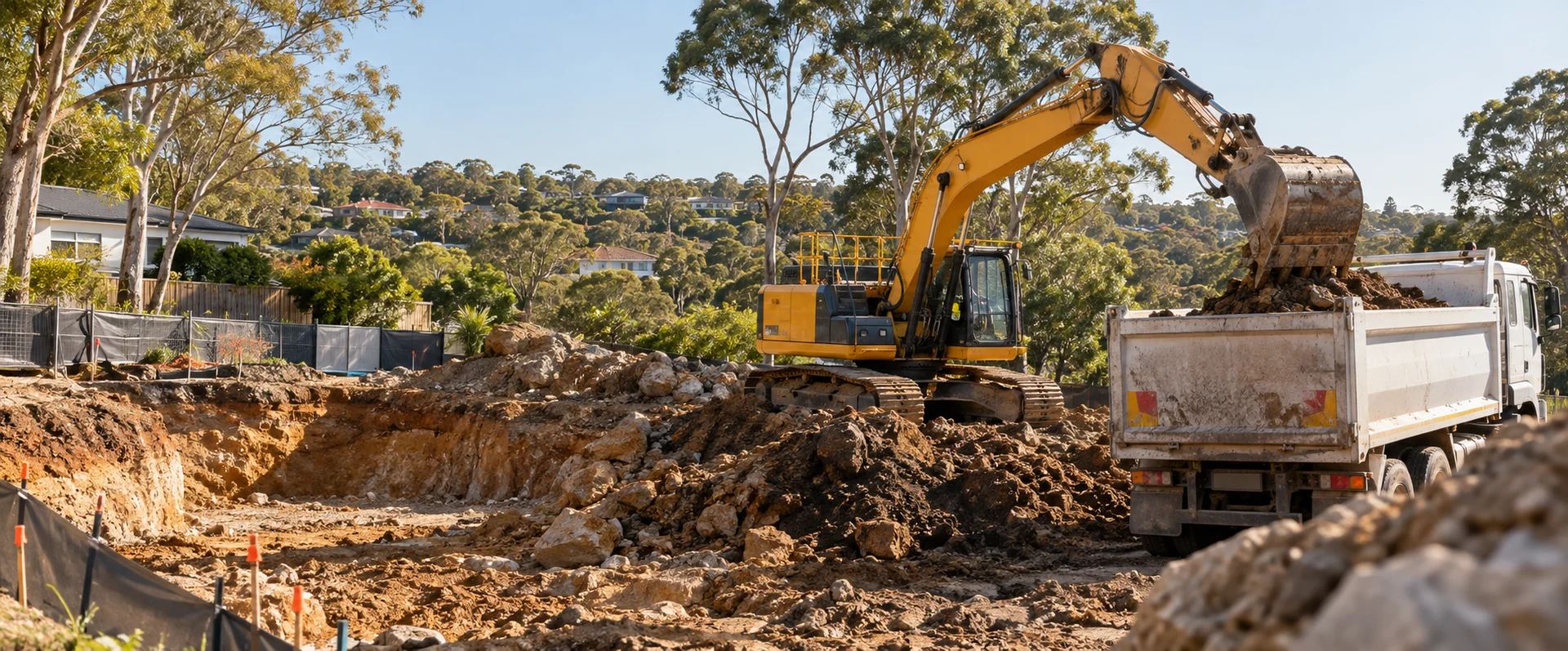
AI-generated illustration for Sutherland Shire Site Remediation, inspired by Sutherland Shire, NSW
EARTHWORKS & SITE MANAGEMENT

Sutherland Shire Site Remediation

Discuss a specialist-led scope where contamination or unsuitable materials affect the next stage of development.

SUTHERLAND SHIRE, NSWRESIDENTIAL   /   COMMERCIALAI-generated site illustration
YOUR SITE. THE RIGHT APPROACH.

Site Remediation in Sutherland Shire

Contaminated or poor-quality ground can stop a project, and Sutherland Shire Site Remediation restores it to a safe, usable condition. We excavate, remove and replace affected soil with proper handling and disposal.

Share any reports, testing results or concerns about previous site use. A clear scope for removal, validation and fill helps you meet consultant and council requirements while keeping the project moving.

Across Kurnell, Taren Point, Caringbah, Miranda and Cronulla, former industrial and older residential sites may need attention. Careful work, correct documentation and clean handover give you confidence in the ground you build on.

Explore the scope ↓
01 Site review
and access
02 Clear written
scope
03 Defined site
handover
LET'S TALK ABOUT YOUR SITE

Get A Free Estimate

Tell us about the job. Save your project details, then call us to discuss a quote.

Your brief downloads to your device. No enquiry is sent. Call 00 0000 0000 to discuss your project. Privacy information.

Site Remediation Services in Sutherland

01

Contaminated Soil Removal

We excavate affected soil carefully and load it for appropriate disposal, following the environmental consultant's remediation action plan and waste classification, helping restore your site to a safe condition for building, landscaping or future use, reducing your future legal liability.

02

Validated Clean Fill

Removed ground is replaced with suitable clean fill, with supplier documentation provided for all fill material brought in, supporting consultant and council requirements and giving you confidence in the quality of the ground you build upon, avoiding delay and cost.

03

Documentation and Compliance

Correct handling, disposal records and coordination with consultants keep your remediation compliant, with waste tracked from your site to the receiving facility, giving you the paperwork needed to move forward with approvals and construction, reducing the risk of costly delays.

CONTAMINATION PATHWAY

Site Remediation Experts in Sutherland Shire: How We Do The Job

Remediation is led by an environmental consultant. The earthworker follows their plan.

  1. Preliminary assessment

    A consultant reviews the site history, and may recommend sampling. This is often called a Phase 1 environmental site assessment. It draws on past land uses, aerial photographs, Council records and a site walkover to identify possible sources of contamination.

  2. Detailed sampling

    A Phase 2 investigation samples soil, and sometimes groundwater, to find what is there and where. Samples are analysed by an accredited laboratory, and the results tell the consultant whether remediation is needed and how far and deep contamination extends.

  3. Remedial Action Plan

    If needed, a plan sets out how contaminated material will be managed or removed. It covers excavation limits, handling, dust and odour controls, and validation, and Council or your certifier may need to review it before any remediation works start.

  4. Set up site controls

    Before digging starts, fence the work zone, set up a decontamination point for boots, tools and machine tracks, and post signage. The consultant may also require air or dust monitoring, so confirm the controls in the plan are installed and working.

  5. Excavate to the plan

    Excavation follows the consultant's limits and sequence, with materials kept separate by classification. Workers follow the safety controls in the plan, and the consultant may inspect excavation faces or sample before deciding whether digging can stop or must go deeper.

  6. Dispose lawfully

    Classified material goes only to a facility lawfully permitted to receive it, with disposal documentation retained. Trucks are covered, every load is matched to weighbridge dockets, and the records form part of the evidence the consultant uses in final reporting.

  7. Validation reporting

    The consultant tests the remaining ground and reports that it is suitable for the intended use. Council or the certifier may rely on this report, so keep a copy with your property records for any future sale, refinance or development.

  8. Backfill with clean fill

    Once the consultant confirms the excavation has passed, backfill with material whose source and classification are documented, such as VENM. Compact it in layers to suit the future use, and keep delivery dockets with the validation report and property records.

SPECIALIST-LED WORK

Do not guess about contamination

Contamination decisions belong to qualified environmental consultants. Where development triggers it, the SEPP Resilience and Hazards (Chapter 4 Remediation of Land) may require contamination to be considered. Council considers this when assessing a development application, so raise any concerns early.

  • Stop work and call the consultant if odd soil, odour or fragments appear
  • Asbestos needs a licensed assessor and removalist
  • Council or your certifier can say whether assessment is required
WHAT TURNS UP IN OLD SUBURBS

Typical contaminants

Asbestos fragments in soil

Broken fibro from past demolition or dumping can be in the ground. It must be assessed and handled by licensed people. Do not pick it up or keep digging around it, and expect a clearance inspection once removal is finished.

Lead from old paint

Soil around older houses can carry lead flakes from weathered paint. Levels are often highest near walls and under eaves. Keep children away from bare soil, minimise dust when digging, and ask a consultant whether testing is warranted before reuse.

Fuel tanks

Underground tanks can leave hydrocarbon contamination in soil and groundwater. Former service stations, workshops and some older homes with heating oil systems are common sources. Tank removal needs specialist handling, and surrounding soil is usually sampled before backfilling the pit.

Fill of unknown origin

Imported fill from past levelling may include mixed waste. Its source is often unknown. Signs include brick, glass, slag, ash or plastic in the soil, and such material may need sampling and classification before it can lawfully leave the site.

Treated pine and ash

Old treated-timber sites and burn-off areas can leave residues in the soil. Older treated timber may contain chemicals such as arsenic, and ash can hold metals, so a consultant should advise on sampling before the soil is moved or reused.

SOIL FATE

Where excavated soil can go

Classified clean material

  • VENM or ENM can be reused where the receiving site accepts it
  • Needs classification evidence
  • Lower disposal cost
  • Reuse reduces landfill

Contaminated material

  • Goes only to a lawfully permitted facility
  • Classification sets the facility
  • Landfill levy applies
  • Paperwork must be kept

Keep soil streams separate. Mixing clean and contaminated soil turns a small problem into a large one.

ENVIRONMENTAL TERMS

Site Remediation Terms That You Need To Know

ESA
Environmental site assessment, a staged review and sampling of a site. It usually starts with a desktop history study, may progress to sampling, and is prepared by a qualified consultant to support development applications, property sales, financing or remediation decisions.
RAP
Remedial Action Plan, the document that sets out how contamination will be dealt with. It typically covers the remediation method, controls, contingencies and validation, and the earthworks contractor follows it when excavating, stockpiling, loading and removing affected soil from site.
Validation
Testing after remediation to confirm the ground is suitable for its use. The consultant samples remaining soil against criteria for the intended land use, and the resulting report becomes evidence for Council, certifiers, lenders and future owners of the property.
Classification
Categorising waste soil so it goes to the right facility. NSW EPA waste classification guidelines set the categories, and classification relies on testing or recognised descriptions. Getting it wrong can mean rejected loads, extra cost or penalties for unlawful disposal.
WHY CHOOSE US FOR SITE REMEDIATION

Why Choose Our Site Remediation Experts

Contaminated or poor-quality ground can stop a project in its tracks, and our remediation experts help you move forward with confidence. We excavate affected soil carefully, load it for appropriate disposal and replace it with suitable, validated clean fill. Correct handling, disposal records and coordination with your consultants provide the documentation councils and certifiers expect. Clear communication keeps you informed about the scope, timing and costs at every stage. With local knowledge of Sutherland Shire sites, including former industrial and residential land, we deliver compliant, well-documented results that restore the ground to a safe, usable condition for building or landscaping.

Talk to our team ↗
AI-generated illustration of site remediation works in Sutherland Shire
REMEDIATION RISKS

Common Site Remediation Mistakes in Sutherland Shire: How To Handle Them

01

Digging before assessment

Moving soil without classification can spread contamination and create costs. Wait for the consultant. Clean soil mixed with affected material may then need the same costly disposal route, and later investigation becomes harder once the original ground profile is disturbed.

02

Stockpiles mixed together

Mixed piles often have to be treated as the worst material in them. Keep separate stockpiles for each classification, label them clearly, place them on plastic or hardstand where advised, and cover them so wind and rain cannot spread material.

03

Missing paperwork

Without disposal records, it is hard to prove where soil went. Keep every docket. Match weighbridge dockets to individual truck loads and classification reports, because the consultant, Council or EPA may ask for evidence of lawful disposal after the job.

04

Dust and runoff

Disturbed contaminated soil can blow or wash away. Dust and sediment controls matter more on these sites. Keep exposed areas damp or covered, stop work in strong winds where the plan requires, and protect drains and gutters from contaminated runoff.

ASKED ABOUT SITE REMEDIATION

Frequently
Asked Questions

Environmental assessment, material classification and remediation design.

Ask us about your project ↗
01Do you carry out the environmental assessment?+

Assessment is done by a qualified environmental consultant. The earthworks scope covers excavation and removal under their plan.

02How do I know if my site is contaminated?+

Site history, age of the buildings and previous uses give clues, but only sampling can confirm. A consultant can advise.

03Where does contaminated soil go?+

To a facility lawfully permitted to accept its classification, with disposal documentation. The consultant's classification decides this.

EARTHWORKS & SITE MANAGEMENT

Let’s start your site remediation project.

Share the address, the access and the result you need.
Details first. Then a plan that suits the site.

Start a conversation ↗00 0000 0000