- Formation level
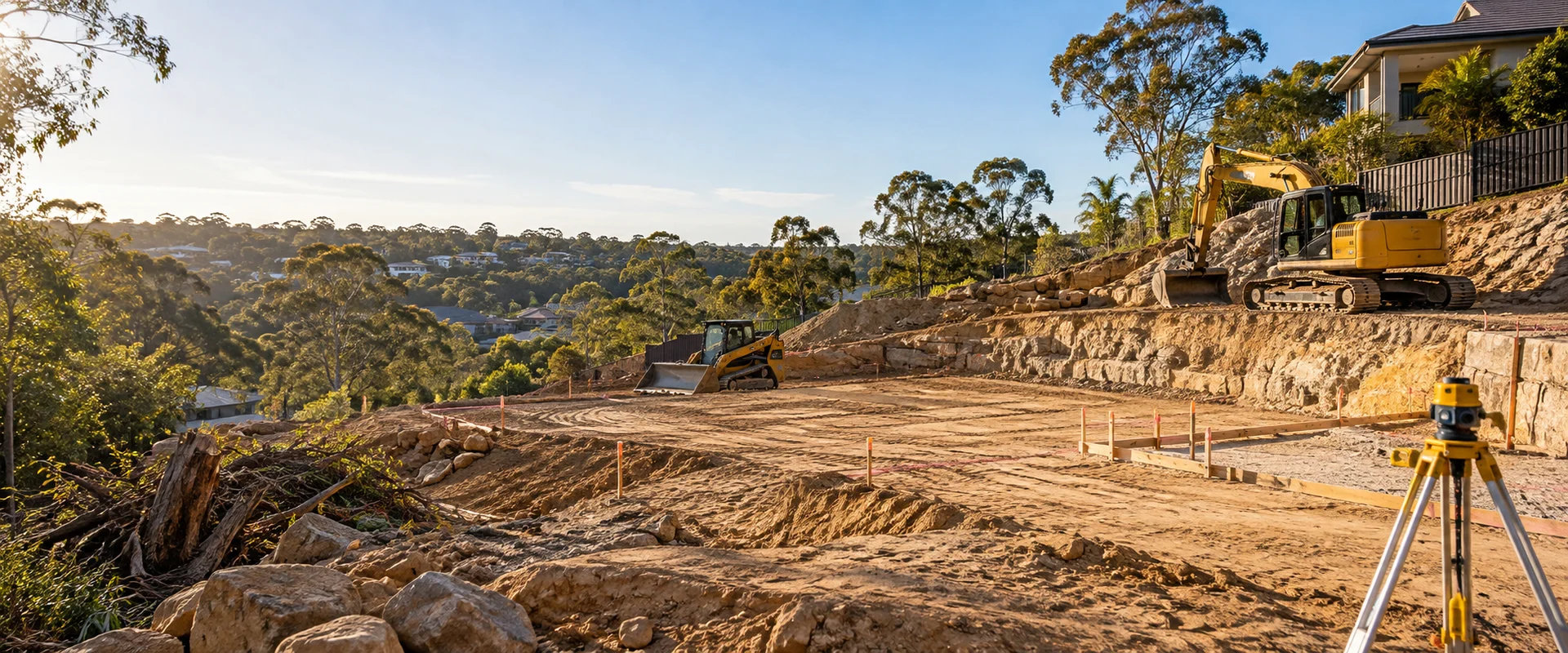
- The finished height of the prepared ground before slab or pavement layers go on. It is set from the design levels, less the thickness of those layers, so an error here flows straight through to the floor or surface height.
- Cut and fill
- Removing high ground and using it, or imported material, to raise low ground to the design level. Balancing cut against fill on site reduces truck movements, though only clean, suitable material should be reused as fill under buildings or pavements.
- Subgrade
- The prepared natural or filled ground that supports whatever is built on top. Its strength and moisture condition decide how well a house slab, driveway or path performs, so soft or wet spots are usually dug out or improved first.
- Stabilised entry
- A rock or shaker-grid pad at the gate that stops trucks tracking mud onto the street. It needs topping up or cleaning as it clogs, and Council can issue fines if mud or sediment reaches the road or stormwater drains.
- Benchmark
- A fixed reference height that all levels on the job are measured from. It is usually set by the surveyor on something stable, such as a kerb or peg, and must be protected from machines and trucks throughout the works.