CONSIDERED DEMOLITION. EXCEPTIONAL POSSIBILITIES.LET’S TALK ABOUT YOUR SITE ↗ 00 0000 0000
Sutherland Shire Demolition
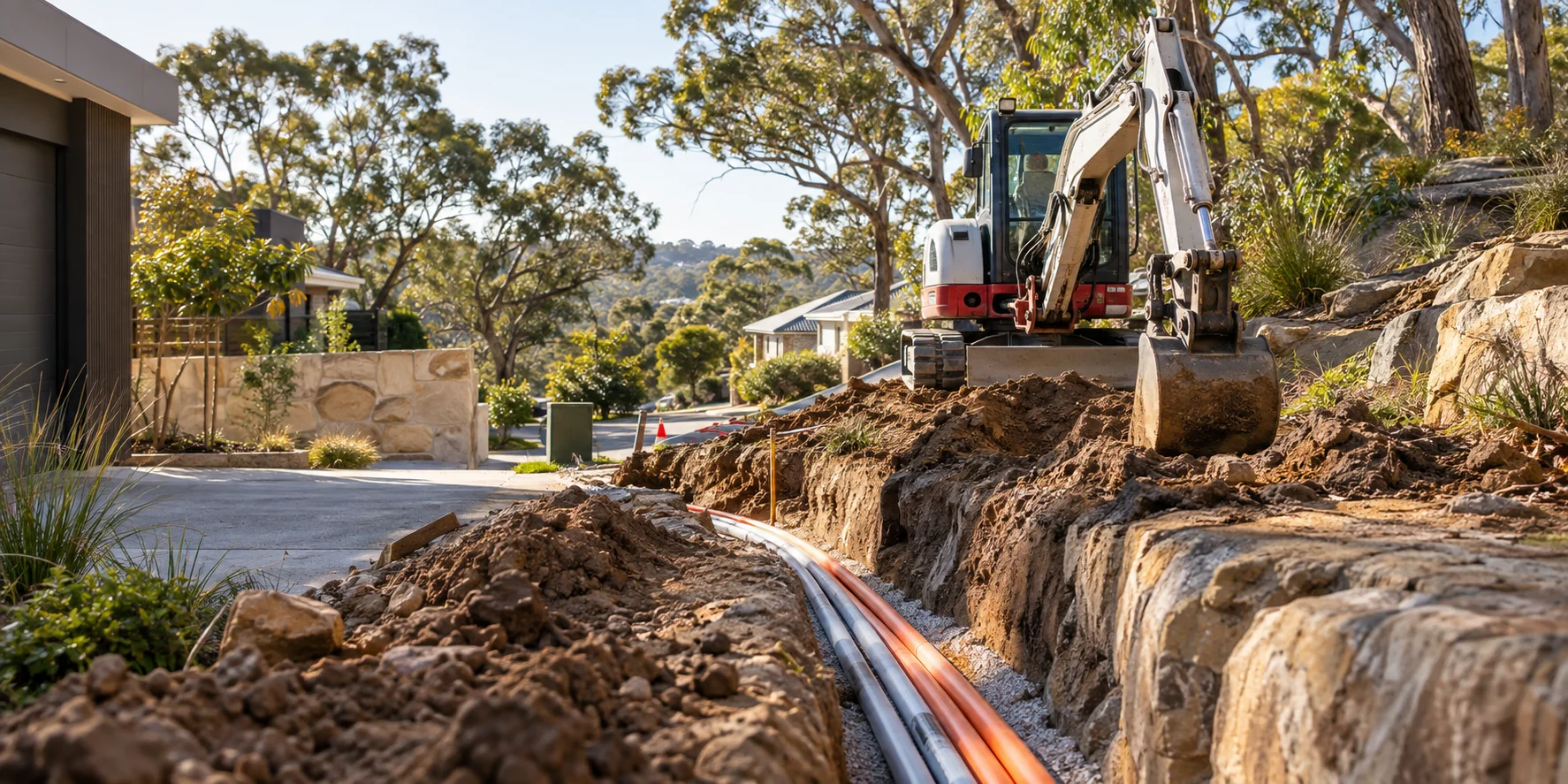
AI-generated illustration for Sutherland Shire Trenching for Power/NBN/Cabling, inspired by Sutherland Shire, NSW
CIVIL & UTILITY WORKS

Sutherland Shire Trenching for Power/NBN/Cabling

Prepare underground cable routes in coordination with the relevant electrical or communications installer.

SUTHERLAND SHIRE, NSWRESIDENTIAL   /   COMMERCIALAI-generated site illustration
YOUR SITE. THE RIGHT APPROACH.

Trenching for Power/NBN/Cabling in Sutherland Shire

Reliable power and data connections begin underground, and Sutherland Shire Trenching for Power, NBN and Cabling delivers neat, compliant trenches for your electrician or provider. We dig to the required depth and route.

Tell us the connection points, trench length and any provider requirements. Proper depth, bedding and warning tape help your installation pass inspection and protect cables from future damage.

From Caringbah and Miranda to Gymea, Kirrawee and Cronulla, trenches often run past driveways, gardens and boundaries. Careful marking, protection of existing surfaces and clean reinstatement keep disruption low and your site tidy.

Explore the scope ↓
01 Site review
and access
02 Clear written
scope
03 Defined site
handover
LET'S TALK ABOUT YOUR SITE

Get A Free Estimate

Tell us about the job. Save your project details, then call us to discuss a quote.

Your brief downloads to your device. No enquiry is sent. Call 00 0000 0000 to discuss your project. Privacy information.

Trenching for Power, NBN and Cabling Services in Sutherland

01

Compliant Depth and Route

We dig trenches to the depth and route required by your electrician or provider, keeping bends gentle so cables pull easily through the conduit, helping your installation meet standards and pass inspection without costly rework, saving you time and money.

02

Bedding and Warning Tape Ready

Trenches are prepared with suitable bedding to protect cables, and left ready for warning tape, reducing the risk of damage during future digging or garden works, for added long-term security. Trench routes can be recorded for your own future reference.

03

Minimal Disruption to Surfaces

We protect driveways, gardens and paths wherever possible, boring or saw cutting only where crossings cannot be avoided, then reinstate trench lines neatly, keeping your property tidy and the cabling work moving quickly, saving you cost and stress during installation.

ELECTRICIAN LEADS, EARTHWORKER DIGS

The cable work is not ours to decide

The network operator, licensed electrician or cabler specifies the depth, conduit type, warning tape and separation from other services. The earthworker digs and backfills to that specification. Get it in writing before the trench opens, and keep it on site.

  • Ask the installer for their trench detail or a copy of the requirement.
  • Overhead power lines have exclusion zones for machines. Ask the contractor to confirm.
  • Never dig near a suspected live cable without it being located first.
FROM PIT TO METER BOARD

Trenching for Power/NBN/Cabling Experts in Sutherland Shire: How We Do The Job

  1. Agree the route

    Mark the path from the connection point, such as the pit, pole or meter board, to the shed, house or pool equipment. The shortest route is not always the clearest. Avoid root zones, pool areas and planned paving where possible.

  2. Locate existing services

    Lodge Dial Before You Dig. Power, NBN, water and gas often share the same side of a property. Potholing confirms where they actually are. Expect hand digging wherever the new trench crosses another service, and record exactly what is found.

  3. Dig to specification

    The trench is excavated to the depth and width the installer gives. Too shallow can fail an inspection. Too deep can make future maintenance harder. Keep the trench floor even and free of sharp rocks so the conduit sits evenly.

  4. Conduit and cable by installer

    The electrician or cabler lays conduit, draws cable and fits warning tape. Separate trades often means separate visits, so plan the timing. Agree who supplies the conduit, bends and warning tape, and how the open trench is protected between visits.

  5. Backfill and reinstate

    Once the installer is satisfied and any inspection is done, backfill in layers with fine bedding around the conduit and return the surface. Record the route with photos and measurements so anyone digging nearby later knows exactly where it runs.

COMMON CABLE RUNS

Where underground cable gets used

Shed or workshop power

Usually a submain from the house switchboard. The electrician sizes the cable and conduit, so the trench width is not a guess. Ask whether a spare conduit for future data or solar is worth adding while the ground is open.

Pool equipment supply

Pool pumps and lighting have specific electrical requirements and separations. Let the electrician lead, and watch for pool plumbing already in the ground. Plan the route carefully around the pool shell, filter pad and any future fencing footings or paving.

NBN and data lines

Often a conduit to the property boundary or pit. Separation from power cable is a typical requirement, so ask the cabler. Check where the lead-in enters the property, and leave a draw rope in place for future upgrades or repairs.

Garden and driveway lighting

Low-voltage lighting runs are shallow, but they still cross irrigation and other services. Map them first. Conduit protects the cable from garden tools and makes moving fittings later easier. A licensed electrician handles the transformer and any mains-voltage connection work.

BEFORE THE TRENCH OPENS

Cable trench checklist

  • Installer requirements for depth and conduit confirmed
  • Electrician or cabler booked for the same window
  • Dial Before You Dig plans checked
  • Private services such as irrigation and pool lines marked
  • Route marked out on the ground
  • Pit or meter board access clear
  • Inspection requirements known before backfill
  • Lawn, paving and garden reinstatement agreed
WHY CHOOSE US FOR TRENCHING FOR POWER/NBN/CABLING

Why Choose Our Trenching for Power, NBN and Cabling Experts

Reliable power and data connections begin with a compliant, well-prepared trench. Our experts dig to the depth and route required by your electrician or provider, preparing suitable bedding and leaving the trench ready for warning tape and cabling. We check for existing services, protect driveways, gardens and paths where possible and reinstate trench lines neatly. Clear communication keeps your electrician, provider and builder aligned, helping your installation pass inspection first time. With local knowledge of Sutherland Shire boundaries, rock and tight frontages, we keep disruption low, protect cables and deliver a tidy, dependable result that supports your connection for years.

Talk to our team ↗
AI-generated illustration of trenching for power/nbn/cabling works in Sutherland Shire
CABLING WORDS

Trenching for Power/NBN/Cabling Terms That You Need To Know

Conduit
Pipe that protects cable underground and allows it to be replaced later. Electrical and communications conduits are usually different colours, and the installer chooses the size, type and bends so new cable can be drawn through without damage or snagging.
Submain
The cable carrying power from the main switchboard to another building. A detached shed, granny flat, studio or pool house often runs from a submain, and a licensed electrician sizes it for the expected load, run length and voltage drop.
Warning tape
Coloured tape laid above the conduit to alert later diggers. It is placed in the backfill, some distance above the cable, so an excavator bucket finds the tape well before it reaches the conduit itself. Always replace it if disturbed.
Draw rope
A line left in the conduit so cable can be pulled through. It saves digging the trench up again when a cable is added or replaced, so ask that one is left in every spare conduit, secured at both ends.
Separation
The required gap between power, data, water and gas lines. It reduces interference and the risk of one service being damaged while another is repaired. The installers and network rules set the distances, so confirm them in writing before digging.
Lead-in
The cable or conduit run from the street pit or pole to the building. For NBN, it usually ends at a connection box on an outside wall. The network and the installer set its route and depth, so confirm both before the trench is marked out.
ASKED ABOUT TRENCHING FOR POWER/NBN/CABLING

Frequently
Asked Questions

Conduit design, existing utilities and crossing points.

Ask us about your project ↗
01Can you also install the cable?+

Cable and conduit work is done by a licensed electrician or cabler. The earthworks side covers excavation and backfill to their specification.

02How deep does a power trench need to be?+

It depends on the cable type, the location and the network or electrician requirements. Do not assume. Ask the installer for their trench detail.

03Can power and NBN share one trench?+

Sometimes, but separation between them is usually required. The electrician and cabler will tell you what is allowed.

04What if the route crosses a driveway or paving?+

Concrete may need saw cutting or boring. Discuss it early so the extra work is part of the plan and not a surprise on the day.

CIVIL & UTILITY WORKS

Let’s start your trenching for power/nbn/cabling project.

Share the address, the access and the result you need.
Details first. Then a plan that suits the site.

Start a conversation ↗00 0000 0000