CONSIDERED DEMOLITION. EXCEPTIONAL POSSIBILITIES.LET’S TALK ABOUT YOUR SITE ↗ 00 0000 0000
Sutherland Shire Demolition
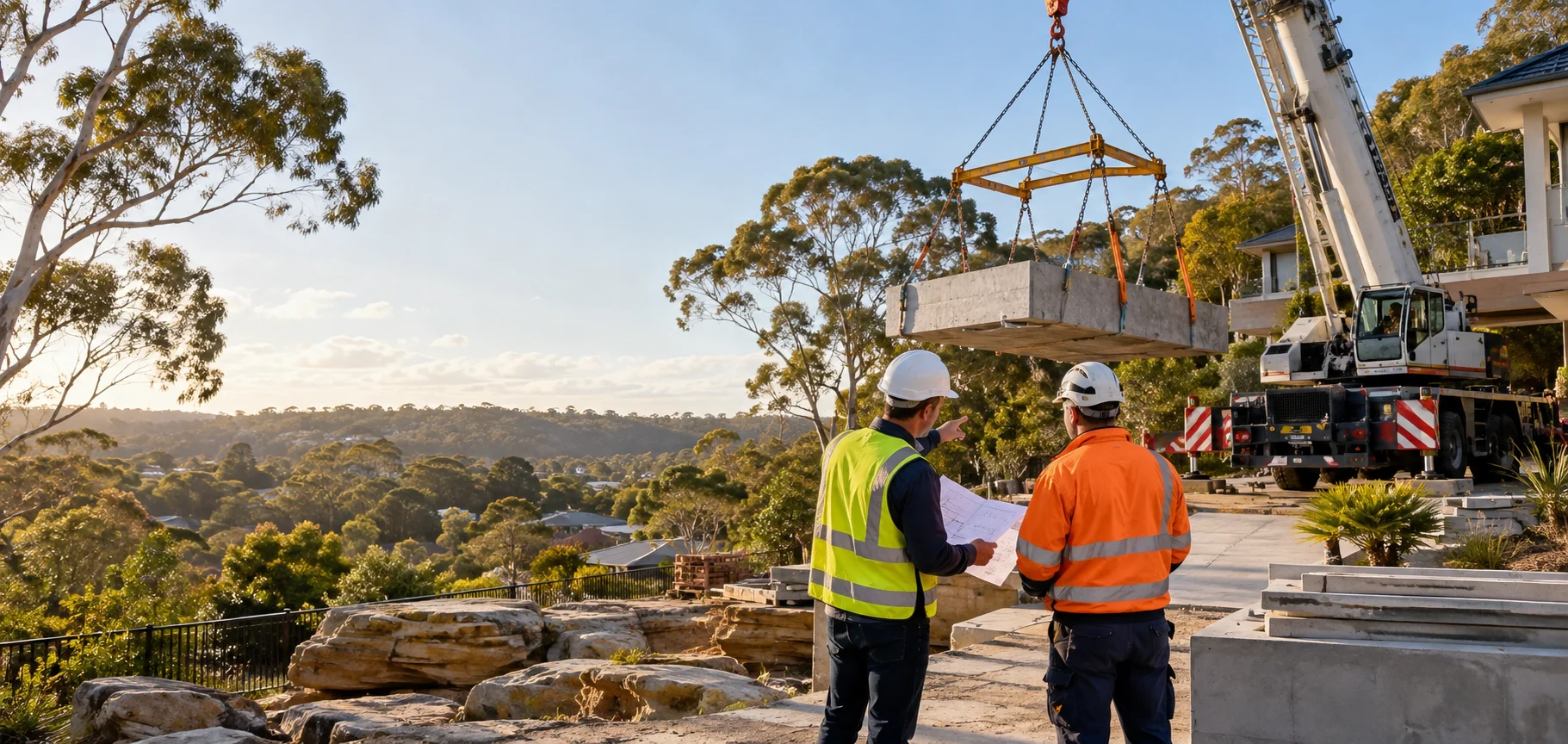
AI-generated illustration for Sutherland Shire Lifting Capabilities, inspired by Sutherland Shire, NSW
EQUIPMENT & SPECIALIST WORKS

Sutherland Shire Lifting Capabilities

Establish whether the proposed equipment and lift plan are suitable for the loads on your site.

SUTHERLAND SHIRE, NSWRESIDENTIAL   /   COMMERCIALAI-generated site illustration
YOUR SITE. THE RIGHT APPROACH.

Lifting Capabilities in Sutherland Shire

Knowing what your machine can safely lift matters, and Sutherland Shire Lifting Capabilities are matched to the weight, reach and ground conditions of each job. We select equipment that suits your load, not the other way around.

Share the item weight, lift height and distance from the machine. Accurate information allows us to check capacity, set up safely and complete the lift without risk to people, materials or surrounding structures.

From Miranda and Sylvania to Cronulla, Gymea and Kirrawee, residential and commercial lifts each have their own challenges. Clear planning and skilled operation give you confidence that heavy items are placed correctly.

Explore the scope ↓
01 Site review
and access
02 Clear written
scope
03 Defined site
handover
LET'S TALK ABOUT YOUR SITE

Get A Free Estimate

Tell us about the job. Save your project details, then call us to discuss a quote.

Your brief downloads to your device. No enquiry is sent. Call 00 0000 0000 to discuss your project. Privacy information.

Lifting Capabilities Services in Sutherland

01

Equipment Matched to the Load

We select machines with adequate lifting capacity for your materials, allowing for reach and attachment weight not just the load, ensuring each lift is completed safely and within the limits of the equipment being used, protecting people and property alike.

02

Weight, Reach and Height Checks

Accurate information about item weight and distance allows us to check capacity before lifting, so please share product specifications or supplier delivery details early, reducing risk and avoiding delays caused by unsuitable equipment on site, keeping crews safe and productive.

03

Safe Setup and Operation

Machines are positioned on stable ground with clear working zones, using outrigger pads or ground mats where surfaces need support, and experienced operators manage the lift carefully to protect people, materials and nearby structures throughout every lift, every working day.

LIFTING LANGUAGE

Lifting Capabilities Terms That You Need To Know

Rated capacity
The maximum load a machine is designed to lift, always tied to a specific radius and configuration. It reduces as the load moves further out, so the only figure that matters is the rated capacity at your actual working position.
Load chart
A table or chart showing capacity at different reach and boom positions. It should be available for the machine. Ask to see the chart that matches the machine, counterweight and attachment actually being used, not one for a similar model.
Working radius
The horizontal distance from the machine's centre to the load. More radius means less capacity. It is measured on the ground, not along the boom, and must be checked at both the pick-up and set-down positions, plus anywhere in between.
Safe working load (SWL)
The maximum load a piece of rigging or attachment is rated to carry. Slings, shackles and chains should be clearly tagged with their rating, and the lowest-rated item in the rigging set limits what the whole assembly can safely lift.
Dogman
The person who slings loads and directs the operator. High-risk work licences may apply. The dogman selects suitable rigging, checks the load is secure and balanced, and guides it into position while keeping other people well clear of the area.
Counterweight
The heavy mass at the rear of a crane or excavator that balances the load being lifted. Load charts are tied to a specific counterweight, so removing or changing it alters capacity, and the swinging rear of the machine needs its own clear zone.
EQUIPMENT QUESTIONS

What to Ask About the Machine

Is there a load chart?

Capacity should be shown for the machine and attachments in the configuration being used. A chart for a different model, boom length or counterweight does not apply, so ask the contractor to show you the relevant figures before you book.

Are there rated lifting points?

Lifting from a bucket tooth or a makeshift hook is not acceptable. Ask where the load attaches. Rated lifting points are designed and marked for the purpose, and the rigging connected to them should also be rated, tagged and inspected.

Safety devices fitted?

Excavators used for lifting generally need features such as hose-burst check valves. Ask the contractor to confirm. These devices help stop a load dropping if a hydraulic hose fails, which matters most when people are working close to the lift.

Inspection records

Ask whether lifting gear and the machine have been inspected, and who can show that. Regular inspections pick up worn slings, cracked hooks and hydraulic faults, and records give you confidence the equipment is being properly maintained between hire jobs.

Attachment compatibility

A hitch, grab or fork must suit the machine. Mixed-and-matched gear can reduce capacity. Heavier attachments also use up part of the rated capacity, so the attachment weight needs to be deducted before working out what load capacity actually remains.

Capacity warning fitted?

Many cranes and some lifting excavators have a rated capacity indicator or limiter that warns as the load nears the chart limit. Ask whether one is fitted and working. It supports the operator but does not replace checking the load chart beforehand.

CAPACITY IN PRACTICE

Close-In Lift vs Long Reach

Short radius

  • Higher capacity from the same machine
  • Boom more upright
  • Less tipping risk
  • Often less ground load

Long radius

  • Capacity falls, sometimes sharply
  • Boom extended, load further away
  • Greater tipping and ground-bearing risk
  • May need a larger machine or crane

Capacity is not a single number. It depends on radius, ground and configuration.

CAPACITY ERRORS

Common Lifting Capabilities Mistakes in Sutherland Shire: How To Handle Them

01

Quoting a single headline figure

A maximum rating usually applies only at the shortest radius. Ask what applies at your radius. A machine advertised by its headline figure may lift only a fraction of that once the load is positioned further out from the machine.

02

Forgetting the rigging weight

Slings, shackles, spreader bars and buckets count toward the load. Add them to the load weight. On a lift already close to the limit, the rigging weight alone can be enough to take the total past the machine's rated capacity.

03

Using unrated attachments

Homemade hooks or chains can fail well below the machine's capacity. Use rated gear only. Untagged chains, welded-on lugs and old ropes have no verified rating, so there is no reliable way to know when or how they will break.

04

Ignoring the ground

Even a capable machine can tip on soft or sloped ground. Ground firmness is part of capacity. Load charts assume firm, level support, so a slight slope or a sinking outrigger can make an otherwise acceptable lift unsafe partway through.

WHY CHOOSE US FOR LIFTING CAPABILITIES

Why Choose Our Lifting Capabilities Experts

Knowing what your machine can safely lift is essential, and our experts match equipment to the job rather than the other way around. We check item weight, lift height and distance from the machine before setting up, ensuring each lift sits well within safe limits. Machines are placed on stable ground with clear working zones, and experienced operators manage the lift carefully. Clear communication means you understand what is possible before arrival. With local knowledge of Sutherland Shire residential and commercial sites, we deliver safe, dependable lifting that protects people, materials and surrounding structures while keeping your project on schedule.

Talk to our team ↗
AI-generated illustration of lifting capabilities works in Sutherland Shire
MAKE THE CALL

Capacity Check Before Booking

  • Get a confirmed load weight
  • Measure maximum working radius
  • Ask for the machine's load chart
  • Confirm lifting points and rigging are rated
  • Check ground, exclusion zones and overhead hazards
  • Ask the contractor to confirm the lift is within capacity
  • Confirm the machine can reach the set-up position
  • Allow for wind and weather on lift day
ASKED ABOUT LIFTING CAPABILITIES

Frequently
Asked Questions

Manufacturer load limits, attachments and exclusion zones.

Ask us about your project ↗
01What is a load chart and why does it matter?+

It shows how much the machine can lift at different distances and positions. It is the basis for deciding whether a lift is within capacity.

02Why can a machine lift less far away?+

Leverage. The farther the load is from the machine, the more it tries to tip the machine forward, so capacity reduces.

03Can I use my own chains or slings?+

Ask the contractor first. Lifting gear needs to be rated and inspected, and the dogman is generally responsible for it.

04Is a bigger machine always the answer?+

Not always. Access, ground bearing and cost matter. A well-planned lift with the right equipment may beat simply upsizing.

EQUIPMENT & SPECIALIST WORKS

Let’s start your lifting capabilities project.

Share the address, the access and the result you need.
Details first. Then a plan that suits the site.

Start a conversation ↗00 0000 0000